
buyer guides
Water-Based vs Oil-Based Polyurethane Floors
Compare water-based vs oil-based polyurethane for hardwood floors: dry time, ambering, odor, durability, cure time, and when each finish makes sense.
Choose the finish for the floor, not the myth
Water-based polyurethane and oil-based polyurethane can both protect hardwood floors. The better choice depends on color goals, dry time, odor tolerance, household disruption, existing finish, and product quality.
For most floor-refinishing situations, professional water-based finish is the practical choice. It dries faster, smells less, stays clearer, and fits a one-day maintenance workflow. Oil-based finish still has a place when a homeowner wants a warmer amber look and can tolerate stronger odor and longer cure demands.
Do not judge the job by the label alone. Cheap water-based finish is not the same as a professional two-component system. Poor prep can ruin either one.
The biggest visual difference is ambering
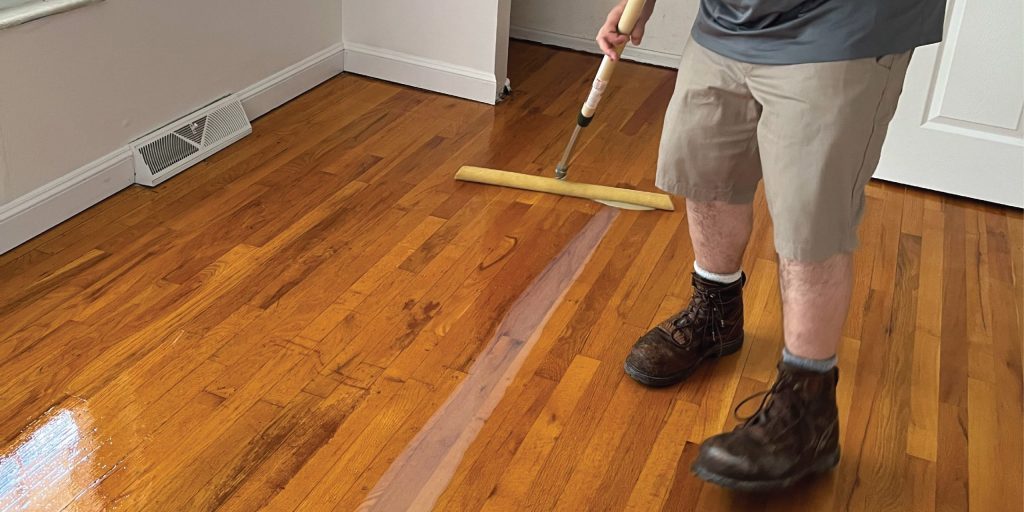
Oil-based polyurethane adds warmth. On red oak, it can deepen the traditional golden tone. On some older floors, that warmth is exactly what the homeowner expects.
Most water-based polyurethane is clearer. It usually keeps the floor closer to its current color and resists ambering. That makes it useful for lighter floors, natural looks, white oak, gray or pale stains, and homeowners who do not want the floor to yellow.
The risk is expectation mismatch. If the rest of the house has aged oil-based finish, one room coated with clear water-based finish may look too pale. If a homeowner wants a modern light look, oil-based ambering may fight the design.
Dry time and cure time are not the same
Water-based finishes generally dry faster. That can allow multiple coats in a shorter window and reduce disruption. It is one reason water-based systems pair well with the Clean ReCoat Process.
Oil-based finishes usually dry and cure more slowly. Odor lingers longer, and the home may need more ventilation discipline.
But dry does not mean cured. A floor may be ready for light foot traffic before it is ready for rugs, pets, dragged furniture, or wet cleaning. Our guide to walking on Clean ReCoated floors explains why use returns in stages.
Odor and VOCs matter in occupied homes
Water-based polyurethane generally has lower odor and lower VOC impact than oil-based polyurethane. That does not mean it is odorless or that ventilation can be ignored. It means the disruption is usually easier to manage in a home where people are living during the work.
Bona’s professional comparison of oil- and water-based polyurethane highlights the practical differences around dry time, odor, and color. Those are the same tradeoffs that show up in real estimates.
If your household has young children, pets, respiratory sensitivity, or limited ability to leave the home, the odor conversation is not a detail. It is part of the finish decision.
Durability depends on product and prep
The old shortcut was “oil is tougher.” That is too simple now. Modern professional water-based finishes can perform extremely well, especially when the floor is prepared correctly and the right product is used for the traffic level.
Durability comes from the whole system:
- Surface prep and cleaning.
- Compatibility with the existing finish.
- Correct abrasion.
- Product quality.
- Coat thickness and application control.
- Cure conditions.
- Long-term maintenance.
A premium water-based system applied correctly is a different conversation than a cheap consumer-grade finish rolled over contamination.
Which one should you choose?
Choose water-based polyurethane when you want faster return to use, lower odor, a clearer look, less ambering, and a long-lasting finish.
Choose oil-based polyurethane when you want a warmer traditional tone, are matching older ambered floors, and can handle slower dry time, stronger odor, and longer cure discipline.
If you are staining the floor, test the full system: stain plus finish. Stain color under water-based finish can look different from the same stain under oil-based finish.
Honest limits: finish choice cannot fix floor-condition problems
Water-based vs oil-based is not the first decision if the floor has wax, acrylic buildup, pet stains, bare wood exposure, cupping, or failed finish. Those issues decide the scope before the finish type does.
If your floor qualifies for the Clean ReCoat Process, a professional water-based system is often the cleanest path. If the floor needs full sanding or a color change, the finish decision becomes part of a larger sand-and-refinish plan.
If you want help choosing a finish that matches your floor, timeline, and household, contact ReCoat Revolution before committing to a product based on a label.