
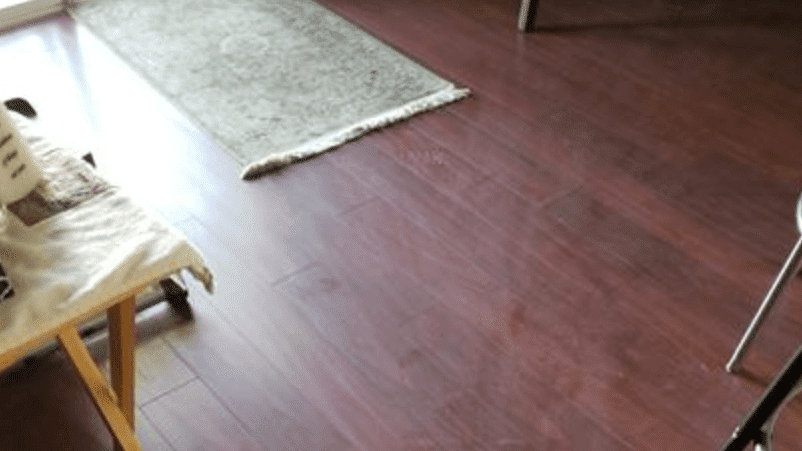
wood floor care
Cloudy Hardwood Floors After Mopping? Fix It
Cloudy hardwood floors after mopping usually mean residue, polish buildup, too much water, or finish wear. Here's how to tell what fix you need.
No, your floor isn’t dirty — that haze is buildup
If your hardwood floors look cloudy after mopping, the problem is usually residue, not a lack of effort. The floor may have cleaner film sitting on top, acrylic polish layers from products like Rejuvenate or Quick Shine, too much water in the seams, or finish that has simply worn thin.
That distinction matters. If the haze is on top of the finish, the fix is cleaning or contaminant removal. If the finish itself is damaged, more mopping will only make the floor look worse.
NWFA homeowner maintenance guidance tells homeowners to avoid wet mopping, avoid steam mops, and use a cleaner made for the floor’s finish. Cornell Cooperative Extension makes the same basic point in plainer language: do not use vinyl or tile floor-care products on wood floors, and do not wet-mop a wood floor.
The first test is simple: residue or worn finish?
Look at the pattern. Cloudiness that shows up as swirls, mop tracks, footprints, or dull patches after cleaning usually points to residue. Cloudiness that follows traffic lanes and looks gray, dry, or raw points toward worn finish.
Do this before reaching for another product:
- Wipe a small area with a clean, barely damp white microfiber towel.
- Dry it immediately with a second towel.
- Check whether the towel picks up gray, sticky, yellow, or waxy residue.
- Put a few drops of water on the dullest traffic lane and watch for beading.
If water beads on the surface, the finish is still doing some of its job. If water darkens the wood, soaks in, or leaves a rough-looking spot, the protective layer may be worn through.
Five common causes of cloudy hardwood floors
Cleaner overuse is the mild version. Even good hardwood cleaner can haze a floor if it is over-applied, mixed too strong, or left to dry in puddles. Spraying the mop pad is safer than spraying the floor.
Wrong cleaner is the next step up. All-purpose sprays, oil soaps, vinegar mixes, ammonia cleaners, and vinyl floor products can leave film or change the sheen. If you are trying to clean polyurethane, you do not need to “feed” the wood. You are cleaning a finish layer.
Acrylic polish buildup is the big one. Products marketed as shine, restorer, refresher, polish, or floor finish often put a thin plastic-like layer over the real finish. That layer can look good the first week and then haze, smear, yellow, peel, or trap dirt. We break down the same failure pattern in our Rejuvenate review. Quick Shine and Mop & Glo can create similar buildup.
Too much water can also create cloudy spots. Wood floors move with humidity, and water can get into seams or small finish cracks. The NWFA problem-prevention guidance recommends stable indoor temperature and humidity because wood reacts to moisture changes.
Finish wear is the final category. If the floor is dull because the polyurethane has thinned out, cleaner will not rebuild protection. That is when you need to decide between professional ReCoating and full sanding.
What to try before calling a professional
Start with the lowest-risk correction. Vacuum with a hard-floor attachment. Then clean a small test section with a pH-neutral hardwood floor cleaner and a microfiber pad. Use very little liquid. Dry the area immediately.
If the floor looks clearer after it dries, repeat that process in sections. Do not soak the floor. Do not add vinegar. Do not add a shine product. The goal is to remove residue, not lay down another layer.
If the test area stays cloudy or gets sticky, stop. That is often a sign of acrylic or wax buildup. More water and more scrubbing can drive the mess into seams, leave lap marks, or create patchy dull spots.
If the floor looks gray, rough, or worn in walkways, cleaning is the wrong category. The finish may be worn through, and the floor may need a new finish layer.
When cloudy floors need ReCoating
ReCoating is a good fit when the existing finish is still mostly intact but dull, lightly scratched, or tired. The floor gets professionally cleaned, abraded, and coated with fresh polyurethane. No wood is removed, and a typical residential Clean ReCoat Process is a one-day project.
That is different from polishing. A polish is a temporary layer that can contaminate the floor. The Clean ReCoat Process provides a new protective finish layer that seals and protects the existing floor.
For a typical 1,000 sq ft home, the Clean ReCoat Process usually falls in the $1,500-$3,000 range. Full sanding and refinishing usually lands closer to $5,000-$8,000 for the same size home, and larger or complex jobs can move into the $10,000 range.
When the haze is one isolated mark
For a pale ring or localized patch, our white-spot guide separates residue, coating changes, and moisture history. A white appearance alone does not identify the affected layer.
Honest limits: haze is not always reversible with cleaning
A cloudy floor can still be a repairable floor, but it is not always a cleaning problem. Bare wood exposure, black pet stains, cupping, peeling finish, or heavy acrylic buildup can change the plan. Sometimes the right first step is acrylic and wax removal. Sometimes it needs the Clean ReCoat Process. Sometimes a full sand and refinish is the honest answer.
If your floor looks cloudy, sticky, or dull and you want a real diagnosis instead of another bottle under the sink, contact ReCoat Revolution and send photos of the worst traffic lanes, kitchen areas, and any spots where the floor looks gray or raw.