
product comparisons
Is Rejuvenate Good for Hardwood Floors? Honest Review
Is Rejuvenate good for hardwood floors? An honest review of the floor restorer – what it does in week one vs year five, and the ReCoat consequences.
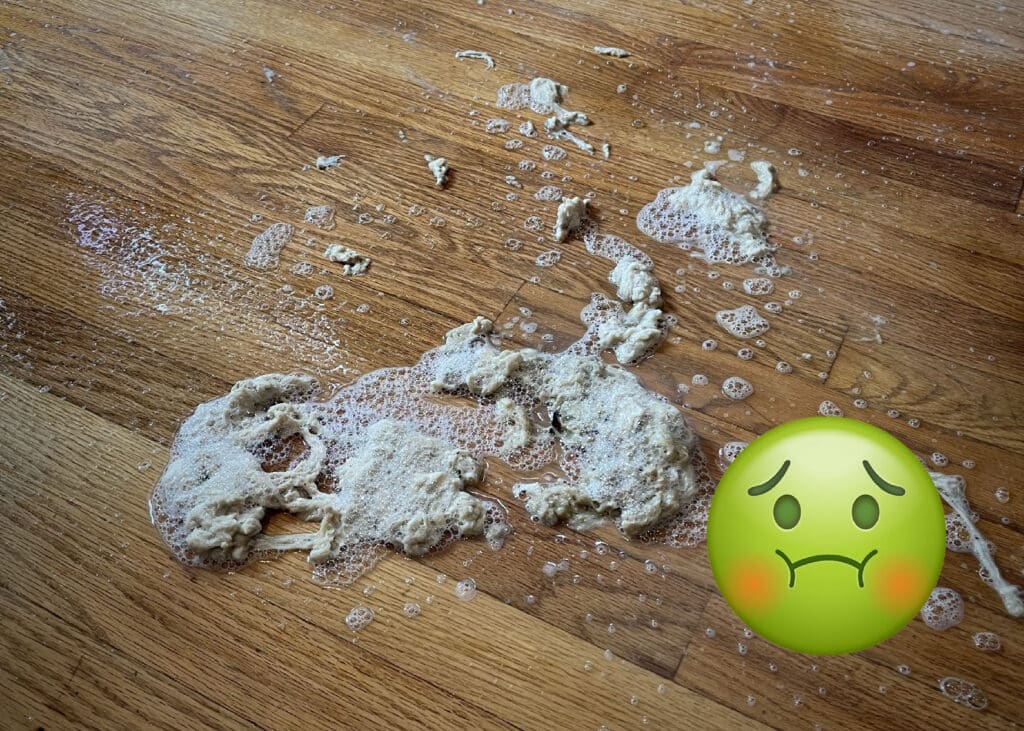
No! Rejuvenate should never, ever be put on a wood floor. Absolutely do NOT use it. Here’s why:
Instead of making you scroll all the way down and read through this whole post, we’ll give you the answer up here in a few short paragraphs.
Question: Is Rejuvenate good for hardwood floors? Answer: R ejuvenate is THE WORST product you can put on your wood or tile floor. It has ruined millions upon millions of square feet of flooring, and we’re not joking around. The wood flooring industry considers Rejuvenate and other products like it (i.e., QuickShine, Mop & Glo, Murphy’s Oil Soap, etc.) a contaminant. Many wood floor professionals will avoid working on floors if they know it is contaminated with acrylic wax or will recommend that the only solution to fixing it is sanding the floor to bare wood and starting over, or having a new floor installed. Unfortunately, none of those options is painless for the average consumer using products like Rejuvenate.
So, is there any hope for my floor then?
Yes, there is. The Clean ReCoat Process is uniquely designed to tackle the elimination of acrylic wax/polymer from a floor. We mechanically and chemically remove the contaminant and then apply a fresh coat of commercial-grade finish in your desired sheen to bring your floor back to beautiful. It’s a simple and effective solution to a problem that has plagued homeowners for decades.
The next question to ask yourself is, how did this get to be such a huge problem for the flooring industry? Why is it so common and why have I never heard of it till just now?
In the content below, we explore the true reality behind the clandestine image surrounding brands like Rejuvenate to reveal that there are more people sharing the same problems because of acrylic wax/polymers. All of the products we’ve mentioned thus far have impeccable five-star reviews on the surface, but drill down a little deeper, and you quickly see what’s really going on.
Rejuvenate has a five-star rating everywhere I look. Surely, it’s not all bad news, right?
Wrong.
Here is an example of what will pop up when you search for Rejuvenate on Google Chrome.
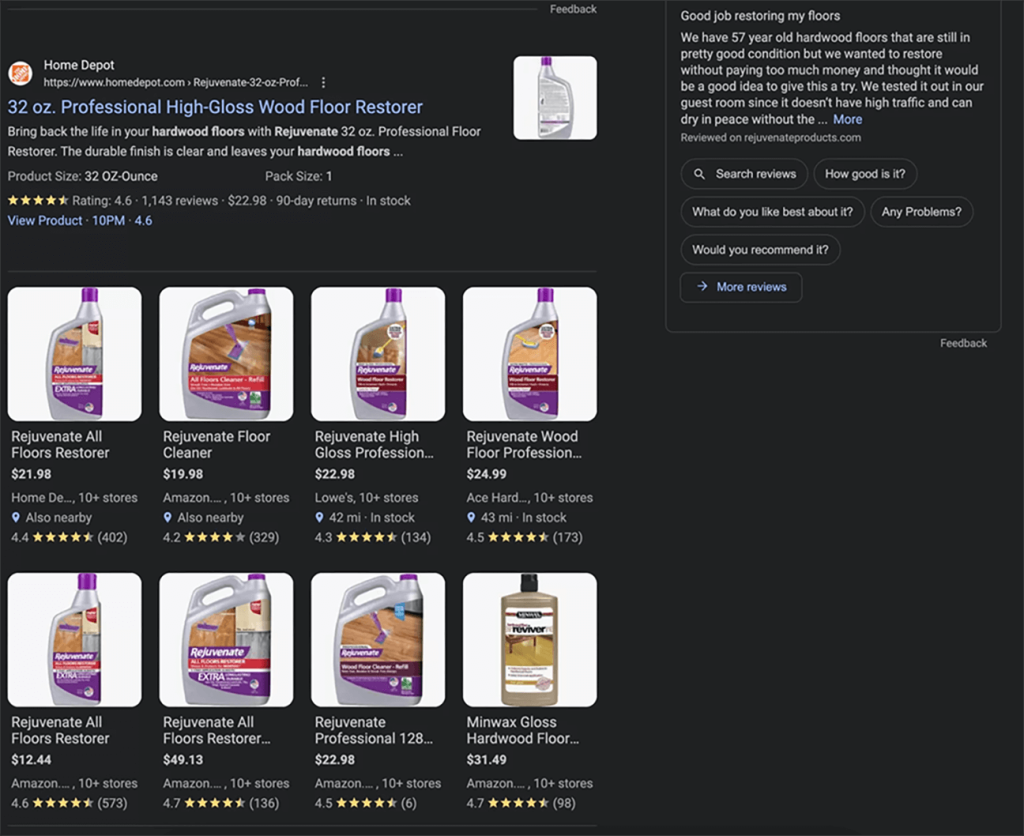
Based on what we can see here, what’s not to love? Nearly a five-star rating as far as the eye can see.
We know it’s a bold claim to say Rejuvenate is a terrible product for your floors and because of that, we want to do our due diligence. So, let’s use Lowe’s official website first in our hunt for some more concrete proof to support our claim.
We’ll be browsing through the review section to see what verified purchasers of Rejuvenate have to say – you never know when a company is purchasing positive reviews or incentivizing its customers to leave good reviews for a mediocre or bad product. It’s a shady and deceptive way to position a product to consumers but companies get caught doing it all the time.
First Up, Lowe’s
Here’s what you’ll see when you pull up Rejuvenate All Floors Restorer on Lowe’s website.
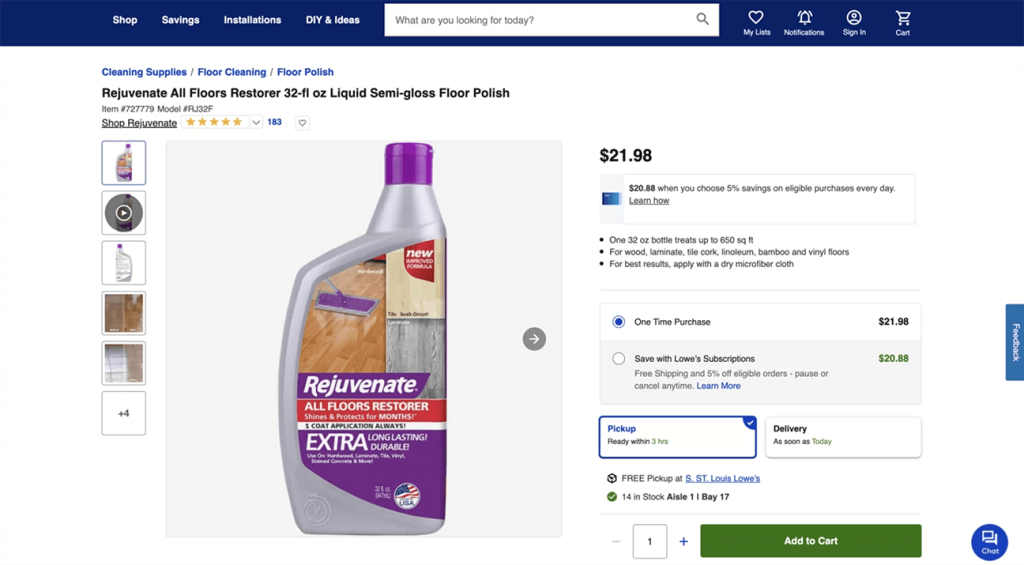
Again, at first glance, it looks like a great product backed by lots of positive reviews. Let’s be honest with ourselves, don’t we shop and buy based upon the recommendations of others too?
According to Jon Clark from Search Engine Journal, 99.9% of people read reviews when they shop online, and 96% specifically look for negative reviews. So, that’s what we’re going to do too. Let’s filter the reviews to show only the one-star reviews. Do that and here’s what you’ll find,
Don’t use this produc t. Any other cleaning product will cause it to come off and cause nasty flaking. – bobdaaaabuilderJune 25, 2020
These six reviews were copied exactly (including typos) from Lowe’s product listing page for Rejuvenate and you can read them in their original format here. There are a couple of elements that we didn’t pull over such as whether or not these customers would recommend this product and if Rejuvenate’s Customer Support responded or not, which they did in some cases.
These curated one-star reviews make up only 5% of the 183 reviews on Lowe’s listing for Rejuvenate. How many of those 5-star review people have yet to experience the troubles that the one-star review customers already have? The chance of them experiencing the same problems is, unfortunately, inevitable.
All of these people are using the same product and following the same instructions on the back of the bottle but for some reason, some are having terrible results – so bad that many of them are begging to get the stuff off of their floors!
Up Next, Home Depot
Now, let’s check out the reviews for Rejuvenate Floor Restorer at Home Depot.
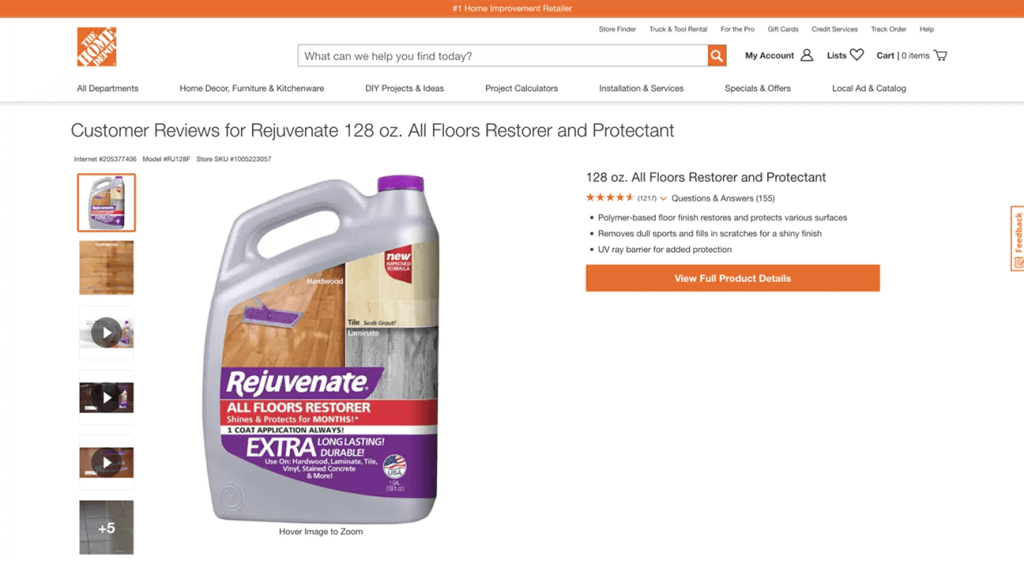
This is the same item as listed on Lowe’s, the only difference is that it’s a larger container of it. It’s more popular with the Home Depot crowd because it has over 1200 reviews and 4.6 stars! Again, we’ll filter the reviews down to see what the one-star reviewers are saying about Rejuvenate.
Read the the 1-star honest reviews below:
Do Not Use! This stuff is horrible. It has ruined my LVP floor. I’m looking for a way to get it off without ripping my floors out. I followed directions to the T. I bought their cleaner, their mop, their bonnet, AND THIS IS WHAT I GOT! What a nightmare. – TerryR Dec 3, 2020
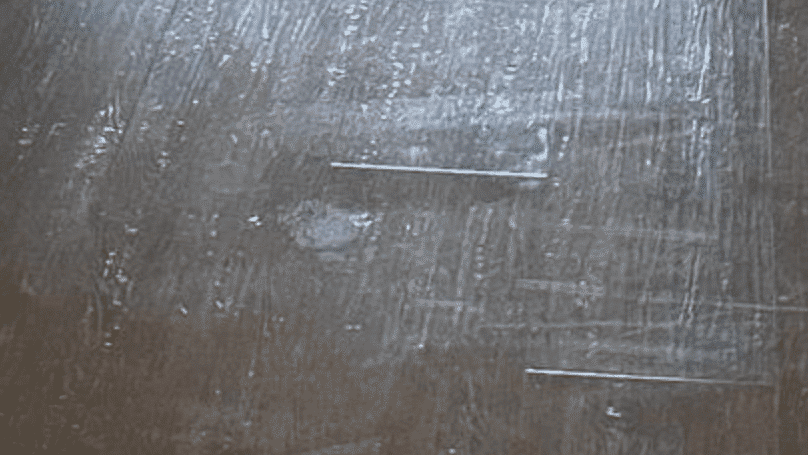
Horrible product! This product has absolutely RUINED my floors! It left some kind of film on it that no matter how many times I mop, I can’t get it off. My floors are now full and pick up footprints horribly! I wish I knew where my receipt was I’d return it. Especially for how much it cost! – fmjohns Oct 6, 2020
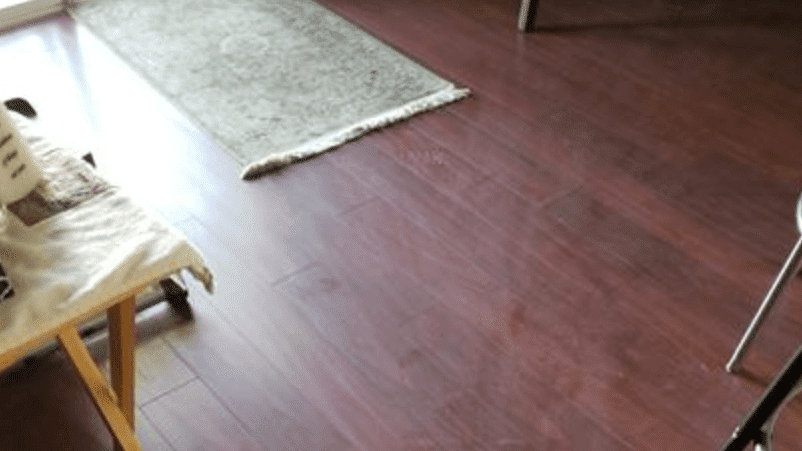
Big mistake my floor was new. You’ll mess it up with this product. – jcolon Aug 27, 2019
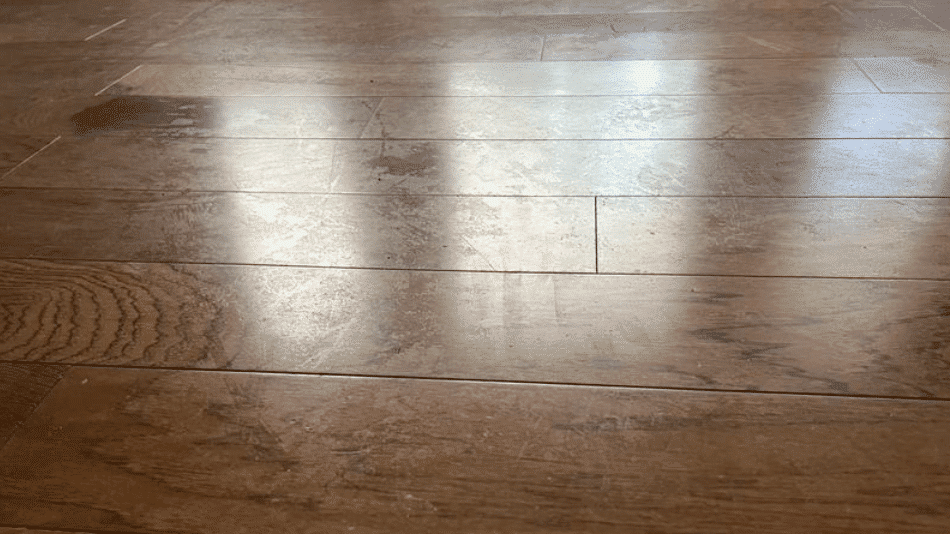
Made the floors look cloudy. Definitely not worth the effort, my floors looked worse after using Rejuvenate. They were cloudy and spotty. Just tried Wieman Polish and Restorer, and the floors look corny, shiny, and restored. – LoriMay 15, 2023
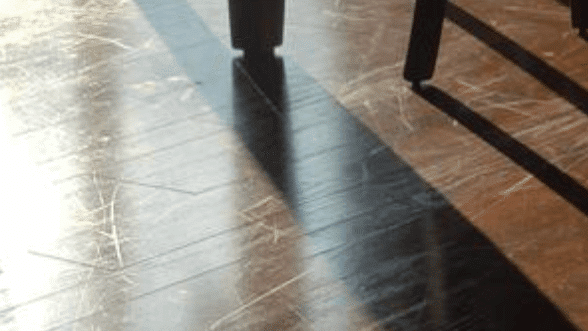
Can’t get it to work. It won’t work without smearing. It doesn’t work on wood, marble, or any other flooring. – dave d. November 23, 2014
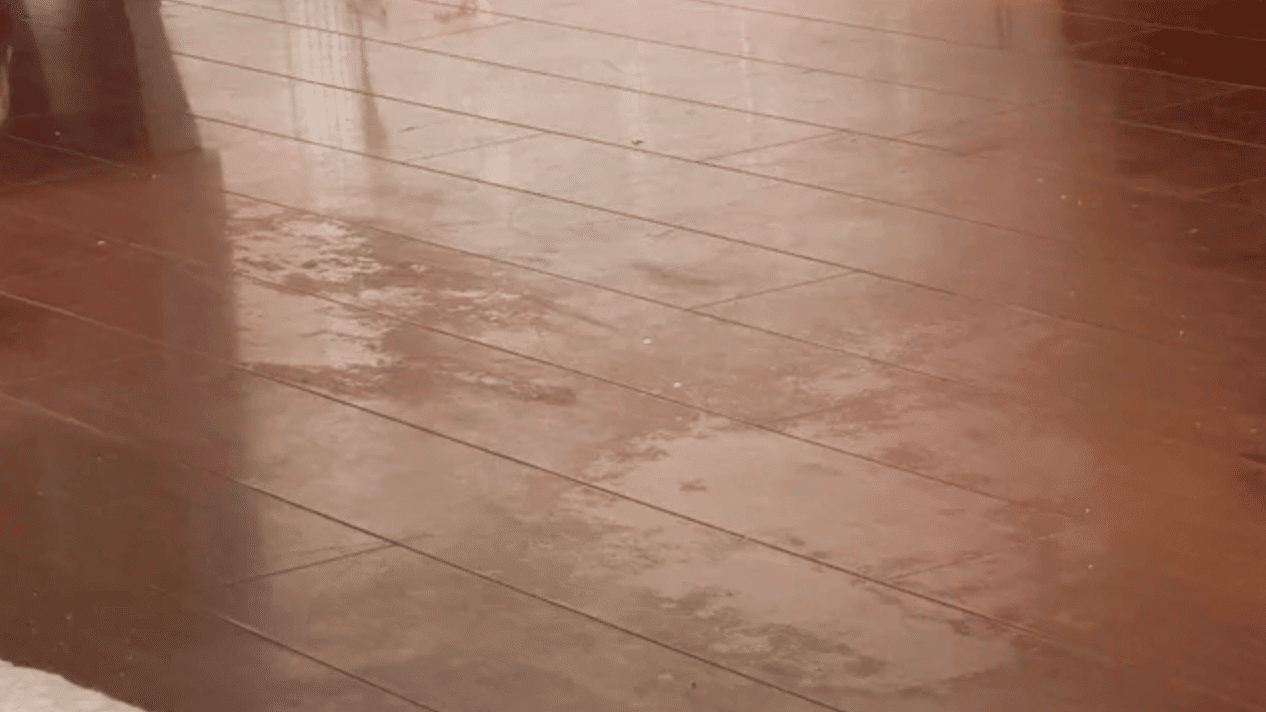
DO NOT USE. This product has ruined our floors. We followed directions to a T, and the product, when dried, was so smeared I thought we did something wrong. I immediately removed it from the most obvious parts of the floor. Which took hours of backbreaking scrubbing. Started over with a clean floor per their instructions and put it down again with the same results. What a smeared mess. Finally called a flooring company, which told me it was the worst product to use. Asked if they could take it off, and he told me he didn’t want to touch it because he did not want to be responsible if he couldn’t get it all off. It is a wax-based product, and there is no way to remove it from our engineered hardwoods. When I contacted the company, they asked for all the info and pictures. I sent it all, and weeks later still have not gotten a response. So what that tells me is they don’t stand by their product. Do not use; call a real flooring company first! – Patti Sep 4, 2021
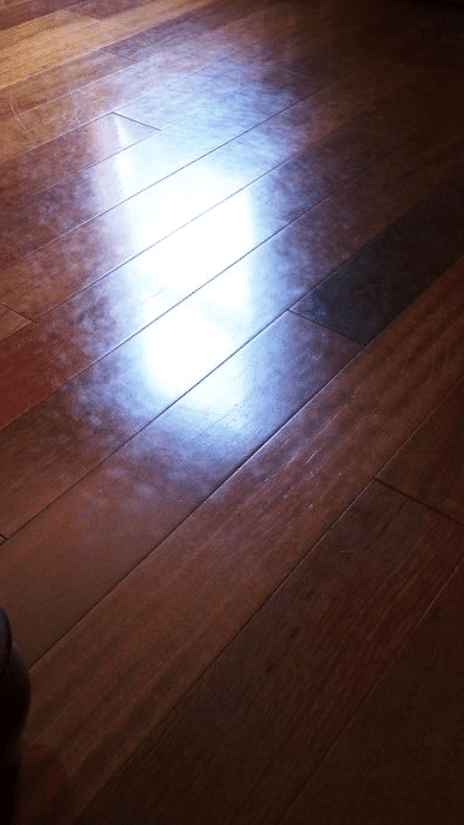
The worst ever! This product ruined my floors also! It looked great at first, but after weeks, it turned yellow on my natural wood floors. In places, I peeled some of it off, which looked like plastic. I am soooo done because now I have to spend money for a professional to strip this mess off. I would not put it in a dog’s house or recommend it. I wasted my money, time & energy on this product!!! – Upset10 Mar 1, 2021
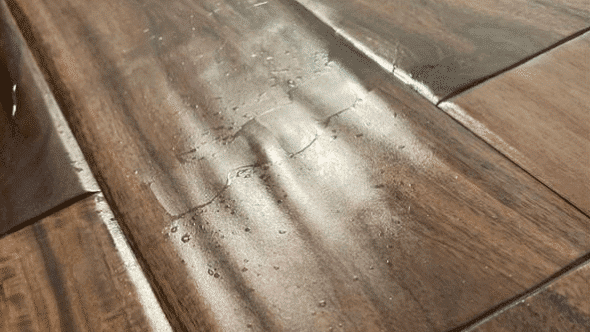
Ruins TILE floors!! What a disappointment! I fully prep’d my bathrooms for 4.5 hours to get a perfect finish. Used rejuvenate and went to check floors 45 minutes after applying – could not believe what a mess the tile was. Looked online and sure enough similar complaints. Now I have to strip the floors. An online suggestion was to strip with either original Windex or 91% isopropyl alcohol (by regular rubbing alcohol in stores). I tested a small area with the 91% alcohol, and it came right up. Not looking forward to more work due to a terrible product. Save yourself the headache – do not buy. – Walker52 Sep 29, 2019
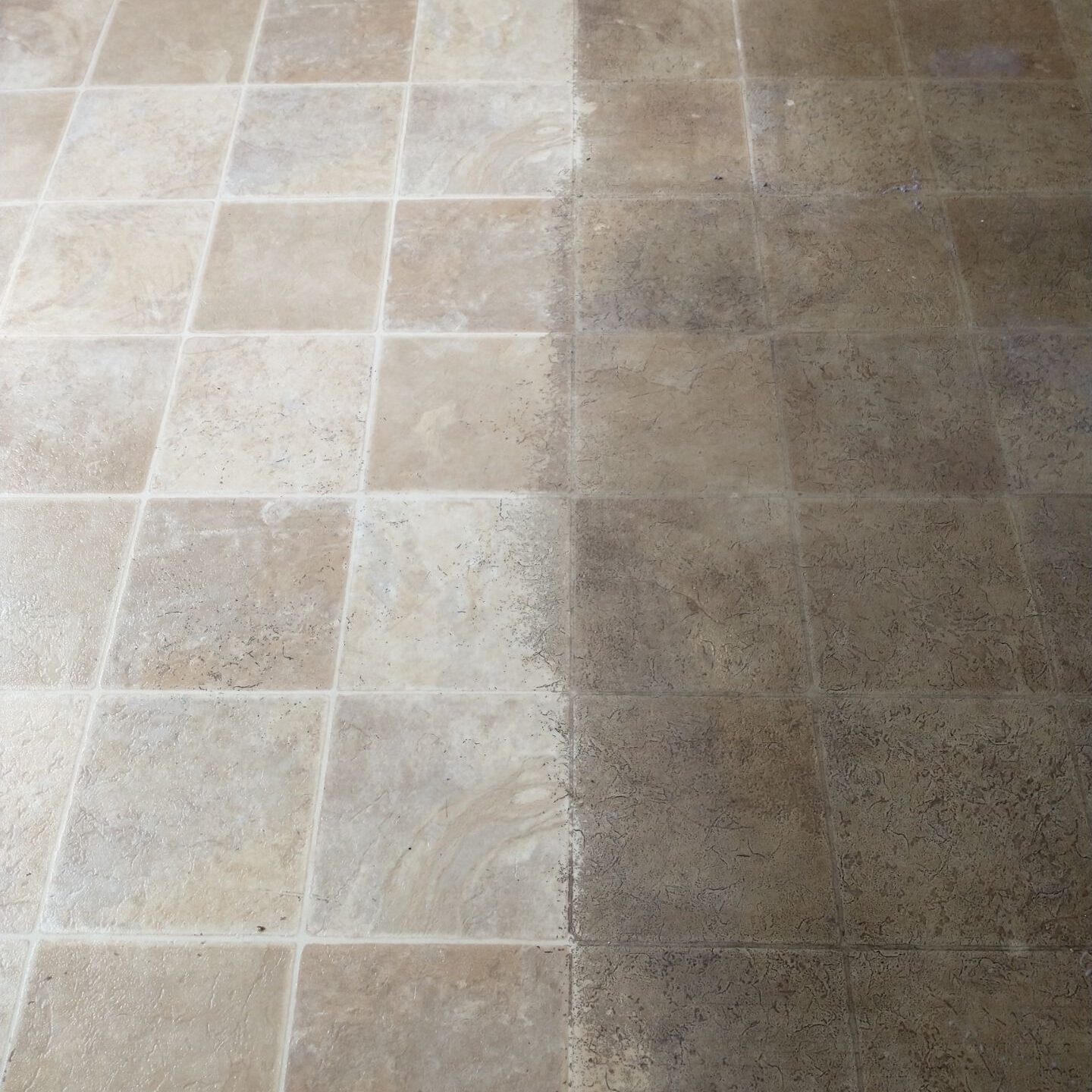
This is like Mop n Glo! Just much more expensive. I just spent two days on my hands and knees… This is like Mop n Glo! Just much more expensive. I just spent two days on my hands and knees scrubbing this off my flooring with ammonia. TERRIBLE! – dd Aug 5, 2019
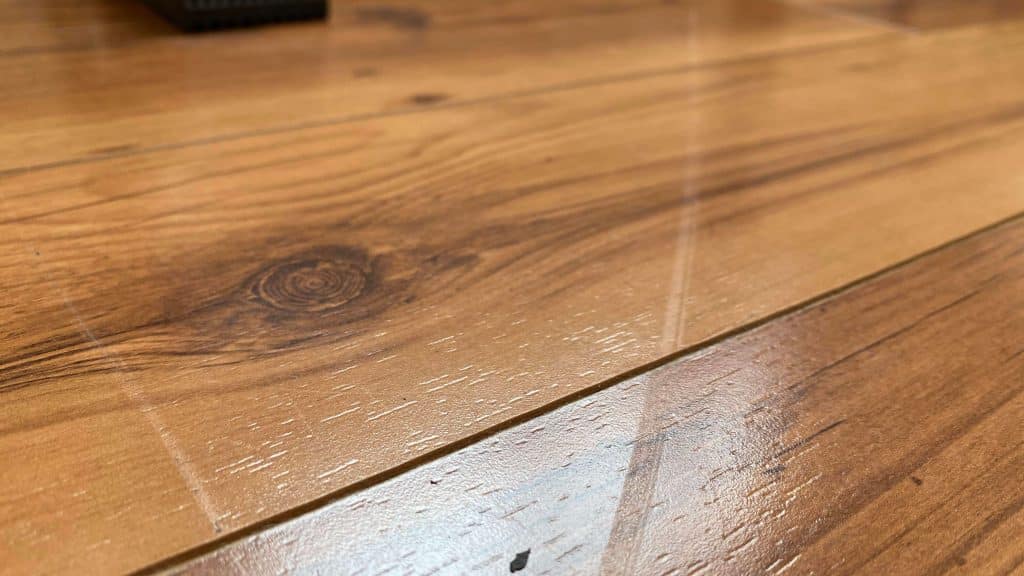
Applied to my near new Bamboo floor. It has ruined it. Very disappointed in product and company…. Applied to my near new Bamboo floor. It has ruined it. Very disappointed in the product and company. They are treating me like the only person in the country to have a problem. – Scrooge Nov 27, 2018
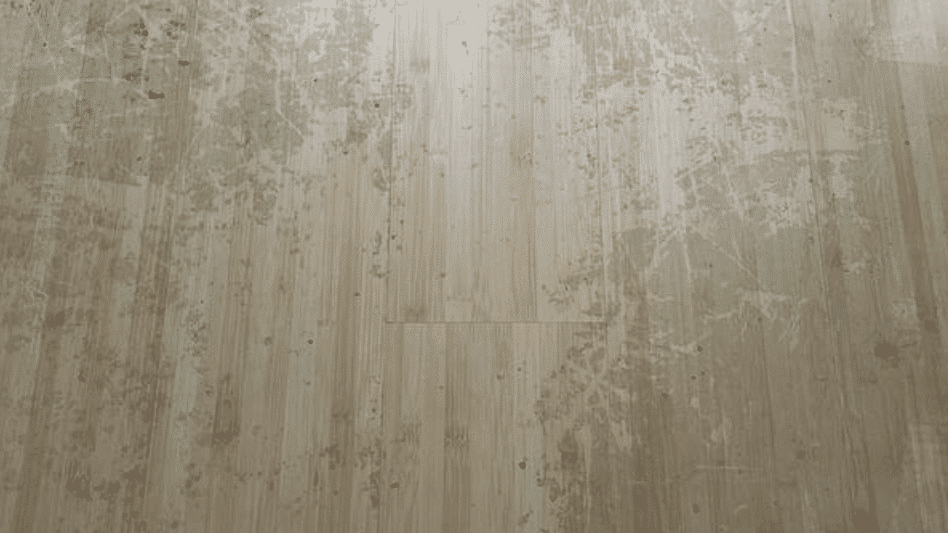
There are more negative reviews here than there were on Lowe’s website but these are still just a small sampling of the damage that has been done by Rejuvenate and other products like it. It’s no lie when we say that millions upon millions of square feet have been ruined because of the acrylic wax/polymer in Rejuvenate.
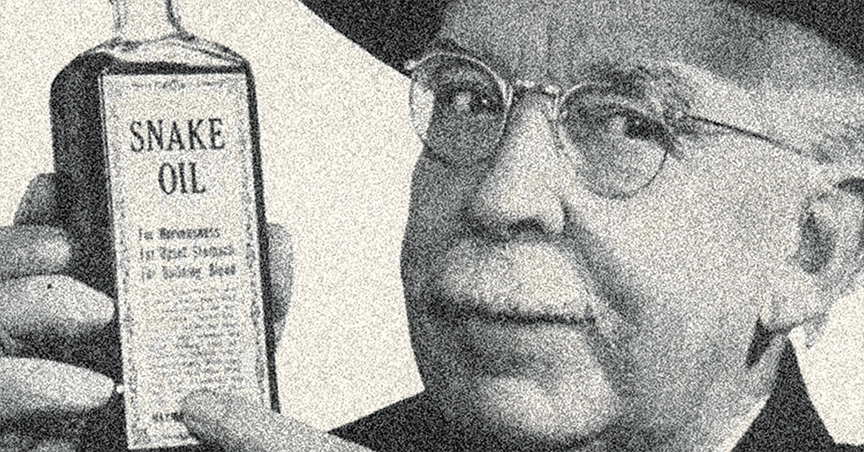
If you need more convincing that this stuff is more like a Snake Oil scam then read through this desperate post on Houzz from user April SM asking how she can remove Rejuvenate build-up from her wood floors.
Still need more proof that this stuff isn’t worth the risk? Read all of the reviews on Amazon to get a great snapshot of the damage that this product is causing for unsuspecting wood floor owners every day.
We’re Barely Scratching the Surface Here
These are just the one-star reviews from Lowe’s and Home Depot. We haven’t even looped in other hardware stores like Menards or Ace Hardware. This still doesn’t include Amazon, Target, Walmart, or any of the other places you can buy Rejuvenate. There are hundreds of thousands, probably millions of people that are having these same results and not having a clue how to fix it.
It is a tragedy too because so many people think it can’t be reversed and opt to have the floor re-sanded, replaced, or just live with hating it for years.
The bottom line is don’t be fooled by the new Snake Oil salesmen peddling cheap crap at a high price!
So, is Rejuvenate good for hardwood floors? Our verdict is: 👎👎👎👎👎
They have a great marketing team that is obviously very skilled at positioning Rejuvenate as a one-stop-shop alternative to traditional floor refinishing. It’s just too bad that the product isn’t worth buying! If you have any of this stuff squirreled away under your kitchen sink or in a laundry room cabinet, we recommend chucking it in the garbage. So long, Rejuvenate!
QUESTION & ANSWER: What does Rejuvenate look like on a floor and how do we get it off?
Rejuvenate on the face of it seems like a miraculous product that for all intents and purposes should work like a charm for a dull and charmless floor. Does it shine the floor up? Yes, BUT there are a lot of other things that it does as well that are conveniently not warned of on the bottle.
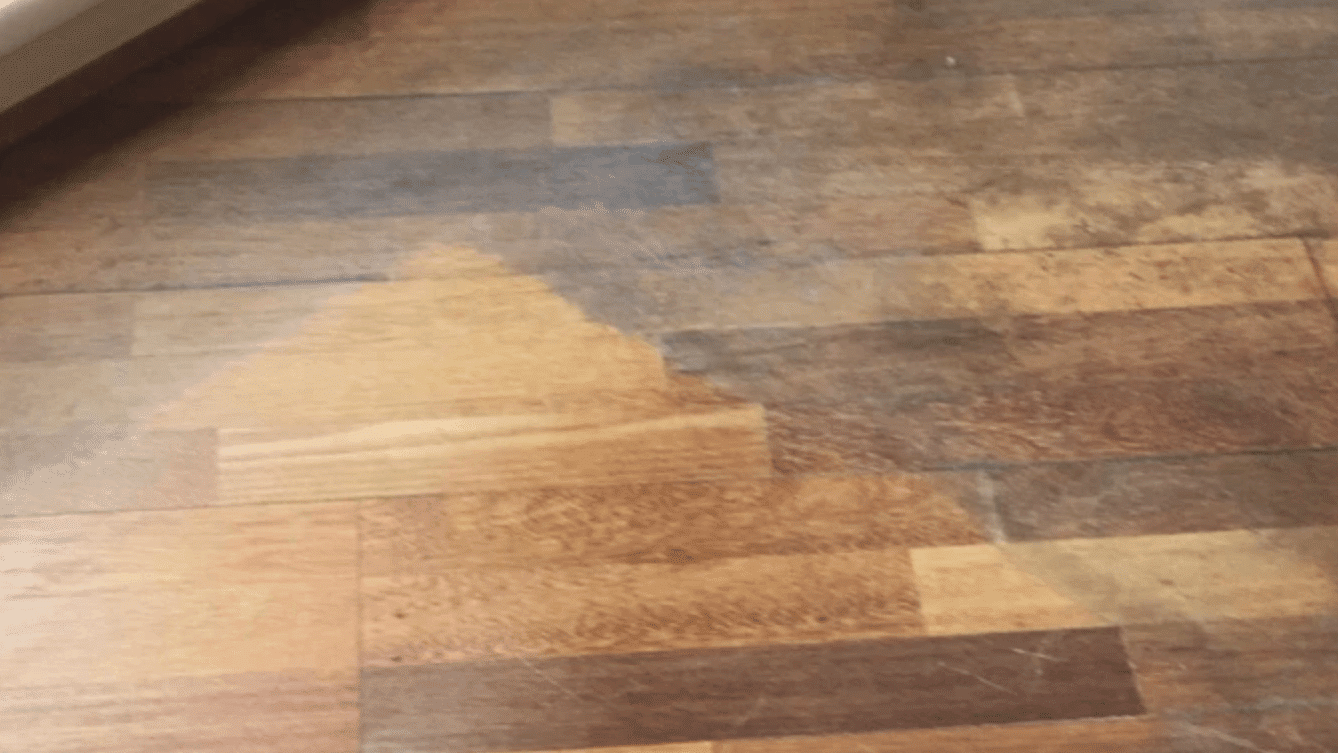
For starters, Rejuvenate is extremely water and liquid-sensitive. If an ice cube melts and a puddle of water sits on the floor for even a short amount of time, a white ring will be left in the Rejuvenate finish. The acrylic polymers are susceptible to water and the white marring will not go away once it has dried. Once it’s there, it’s there to stay. Here’s an example of a kitchen we recently fixed for a couple that had been applying Rejuvenate for almost a decade. Notice the white puddles all over the floor.
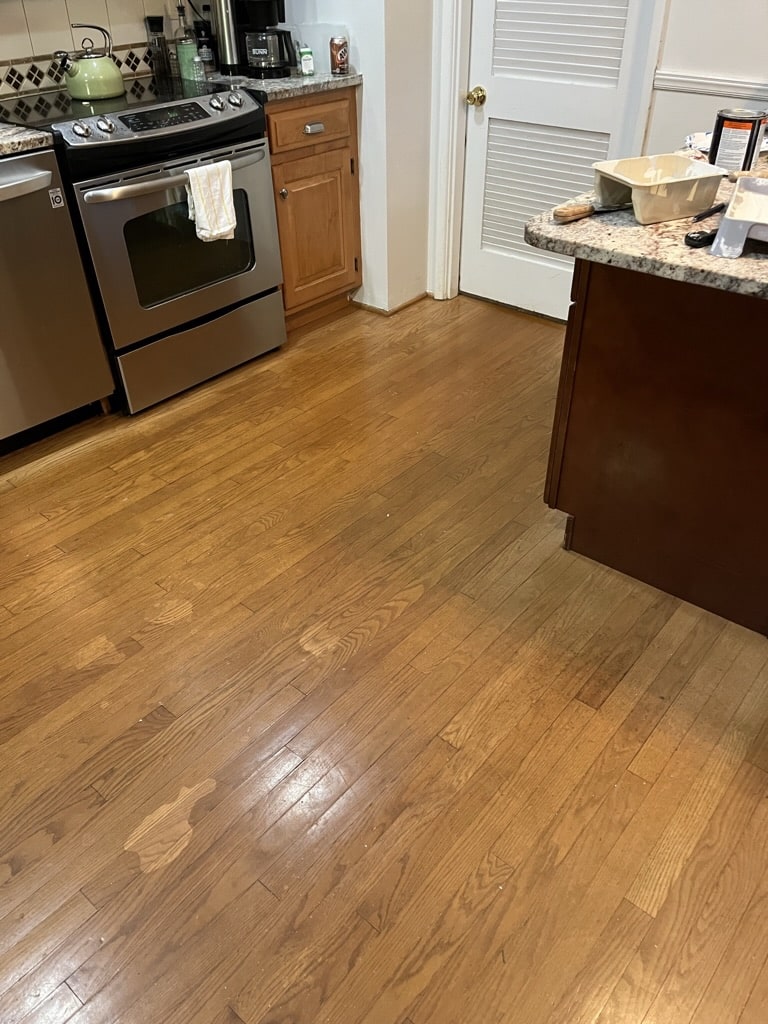
Before Left
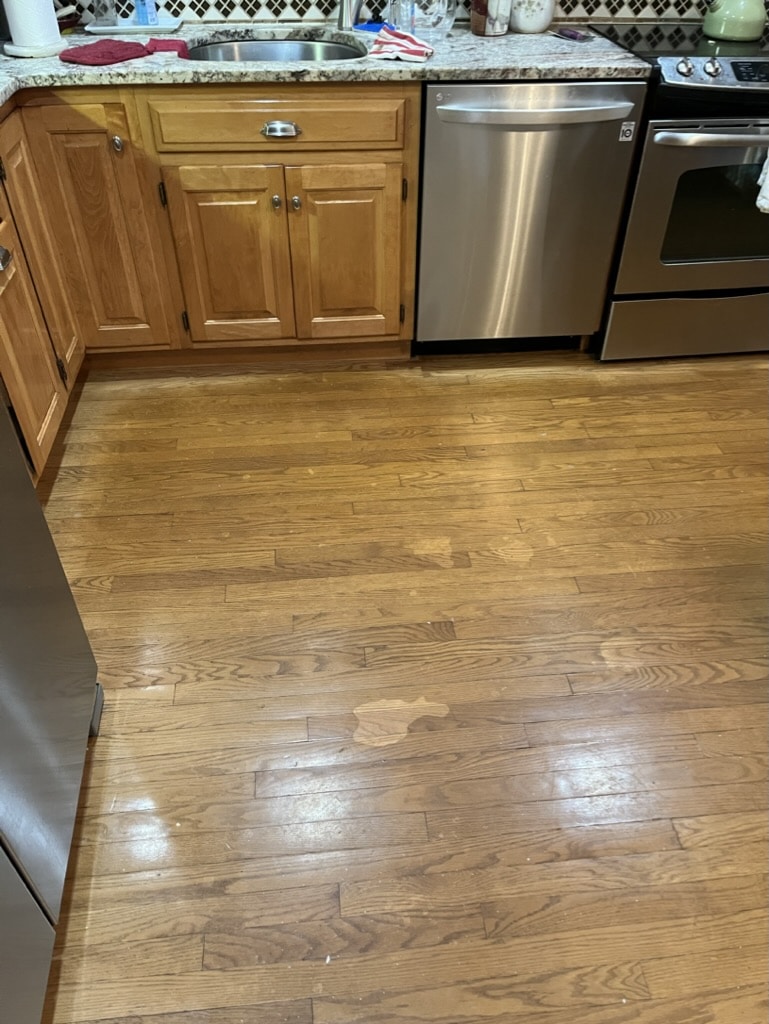
Before Right
Also, take note of the halo around the perimeter of the cabinets, about 10 inches out from the toe kicks. This halo is the cause of the accumulation of dirt and grime that’s been trapped under numerous layers of acrylic wax/polymer. It’s so bad in fact that it makes this blond red oak floor appear dingy and grey. Another unfortunate consequence of this build-up is that all of the layers of acrylic reduce the visibility of the wood grain and make the floor appear more lifeless over time. The graph below illustrates the process of how floors get to be so badly contaminated.
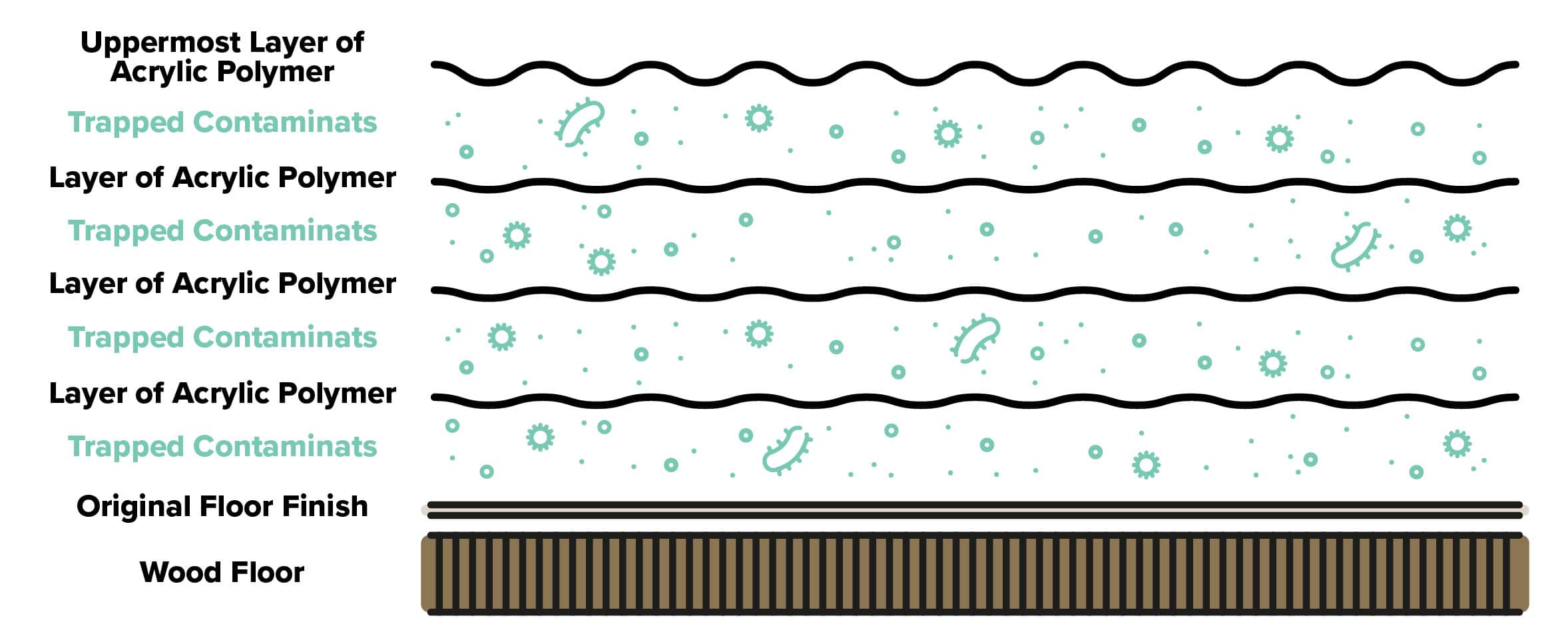
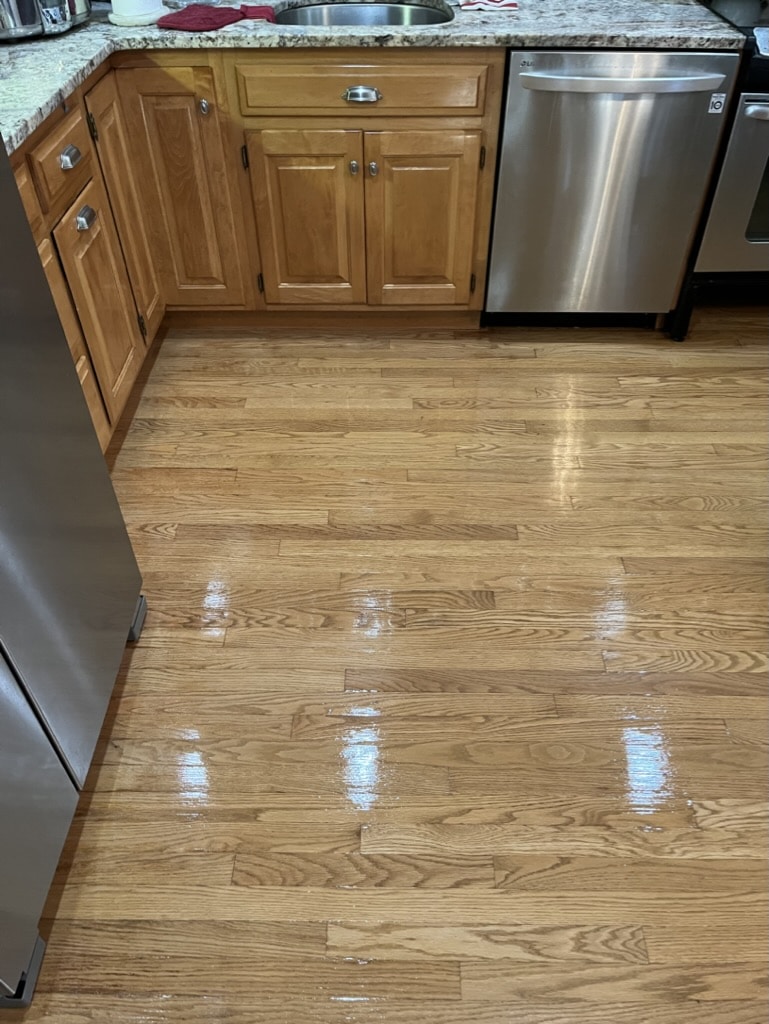
The pictures below are what the floors looked like after being stripped and recoated with a fresh coat of commercial-grade finish to help bring them back to life. Our customer chose a nice Satin sheen for their finish and these floors will dry and look very nice for them.
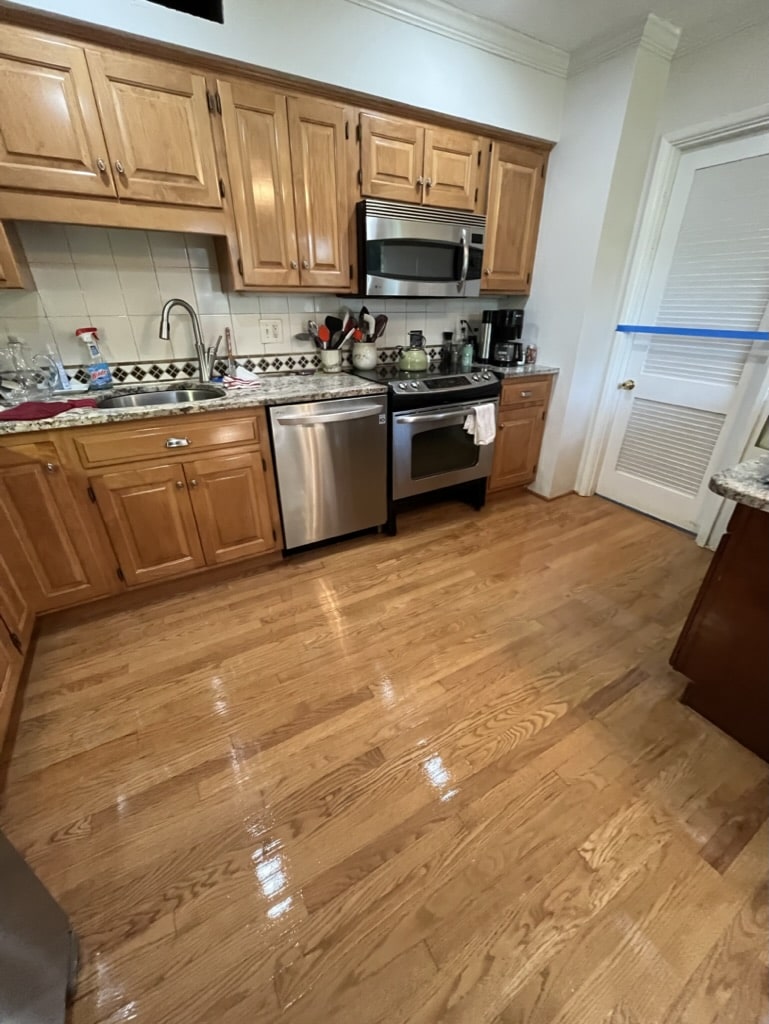
After Left
After Right
It’s hard to believe these beautiful, clear-coated red oak floors were hidden under so much grime. The difference speaks for itself, and here’s what our customer had to say when she saw it after getting home from work.
“ReCoat Revolution just completed a refresh of our kitchen hardwood floors. We are amazed at how great they look! Years of big box polishes had built up and discolored and were impossible to remove. After ReCoat Revolution, it looks like we had new floors installed. Beautiful! Reasonable cost for the great result.” – Janna Gordon, 5 Star Google Review
The most impressive aspect of that project was just how much acrylic wax/polymer we removed from her floor. For an area of less than 250 square feet, it took two of our guys all day to get all the layers of it off.
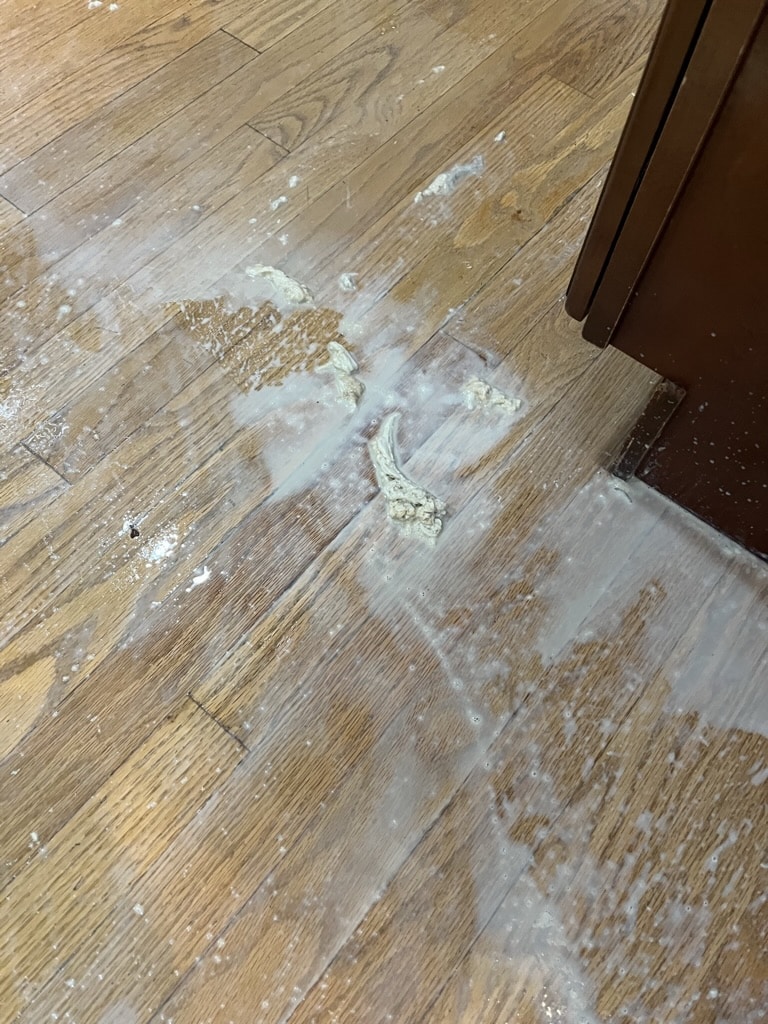
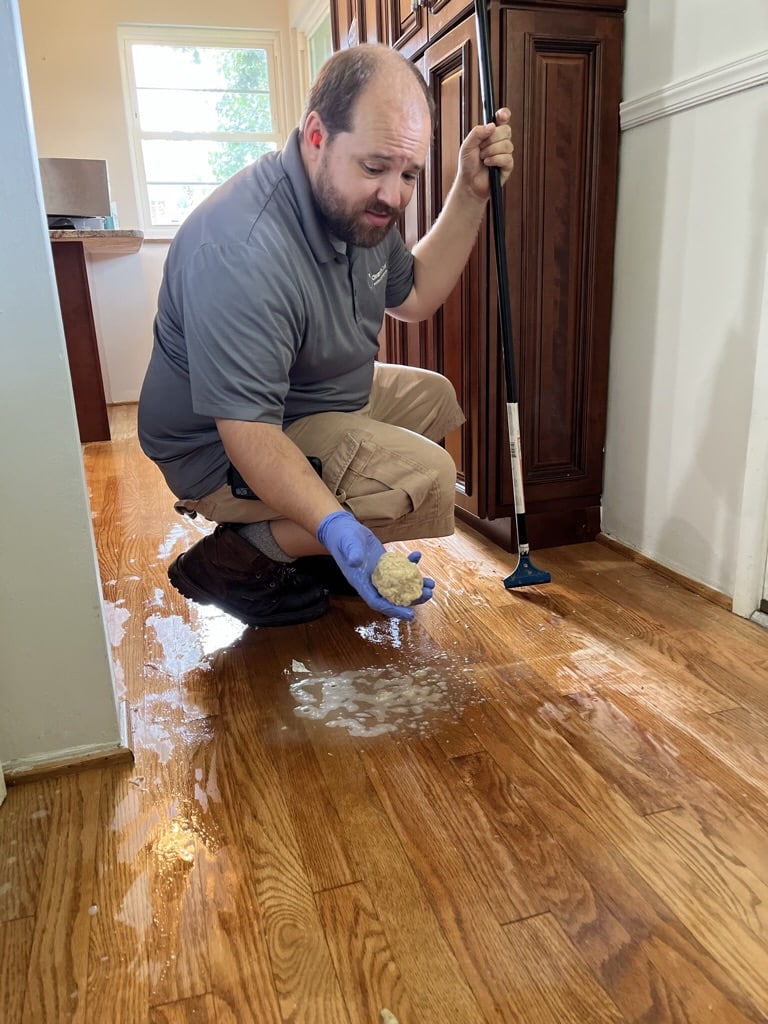
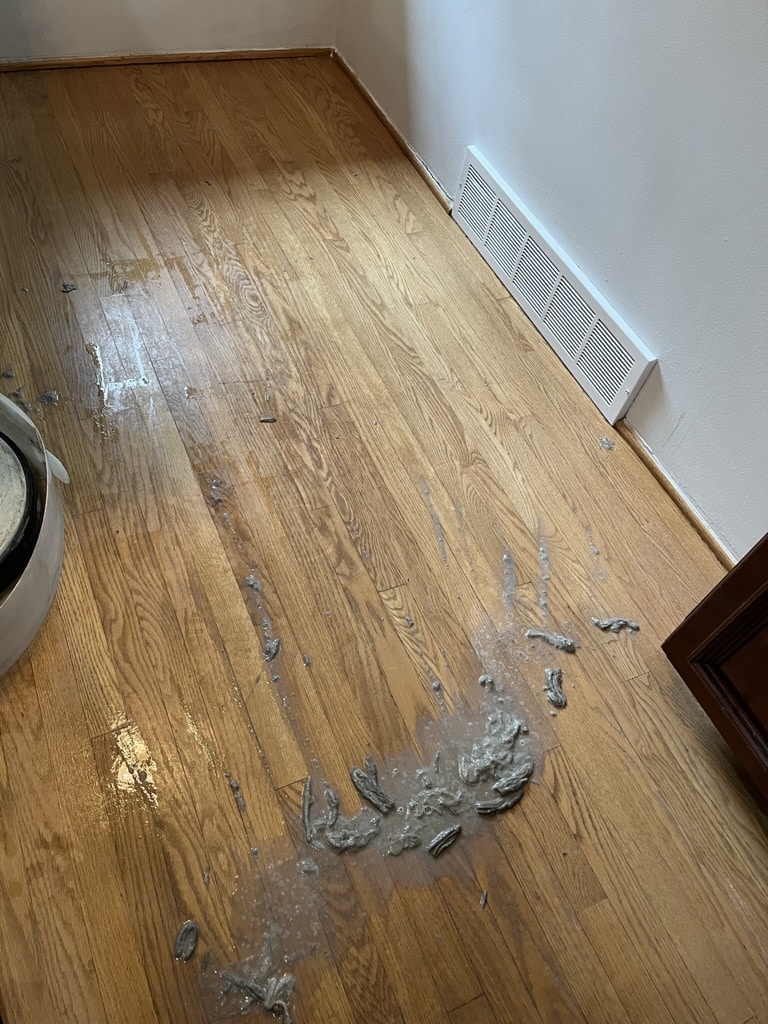
Our technician’s face clearly says everything you need to know about this stuff. It’s nasty and a good idea to never start using it or stop using it now!
ReCoat Revolution is THE BEST solution to fix floors that have been contaminated by using products like Rejuvenate.
Why? Because one out of every 3 jobs involves us removing it from a floor. Most people don’t even know what they’re doing when they squirt some Rejuvenate onto their floor but we know exactly how to get it off for you.
At ReCoat Revolution, we provide complete hardwood floor care. Need to show a 100-year-old floor some love? Good, we love saving old floors. Are your floors youngsters but a little banged and bruised from the dog’s nails? We’ve seen it a million times. With over 25 years of experience in and around the wood floor business, we know our stuff and we’re happy to share it with you if the price is right! 😉
Are you ready to bring your floors back to life with our easy, result-based process? Contact us now to get you the help you need.