Your floors are restored in ONE DAY with NO DUST.
ReCoat Revolution

wood floor care

Cleaners to Avoid on Hardwood Floors (Use This Instead)

Cleaners to avoid on hardwood floors — Pledge, Mop & Glo, Quick Shine, Rejuvenate, Murphy's on poly — and what to use instead for safe maintenance.

Published

There is a small, infamous list of cleaners to avoid on hardwood floors. Almost all of them are sold at the grocery store. Almost all of them have been used in your house at some point, by you or by a previous owner. And almost all of them cause problems that do not show up until you try to refinish the floor years later.

Quick answer: The cleaners to avoid on hardwood floors are Pledge, Mop & Glo, Quick Shine, Rejuvenate, Holloway House, Murphy’s Oil Soap on polyurethane, vinegar and water, steam mops, all-purpose sprays, ammonia, and bleach. Use a pH-neutral hardwood floor cleaner from Bona, Pallmann, Loba, or Rubio instead.

This post is the named-brand version. We will name names, explain what each product does to the floor, and tell you what to use instead.

What is wrong with the products in the cleaning aisle?

Most “wood floor” products at Target, Walmart, and the grocery store fall into one of three categories:

  1. Acrylic polishes that pretend to clean. Mop & Glo, Quick Shine, Rejuvenate Floor Restorer.
  2. Oil and silicone sprays. Pledge, Endust, Old English.
  3. Soaps that should not be on poly. Murphy’s Oil Soap (the original).

The genuinely good options (Bona PowerPlus, Pallmann Clean, Loba Clean, Rubio Maintenance) live at flooring stores or hardware stores, not the grocery aisle. That distribution gap is most of why this confusion exists.

Cleaners to avoid: the named-brand list

ProductWhat it actually isWhat it does to your floor
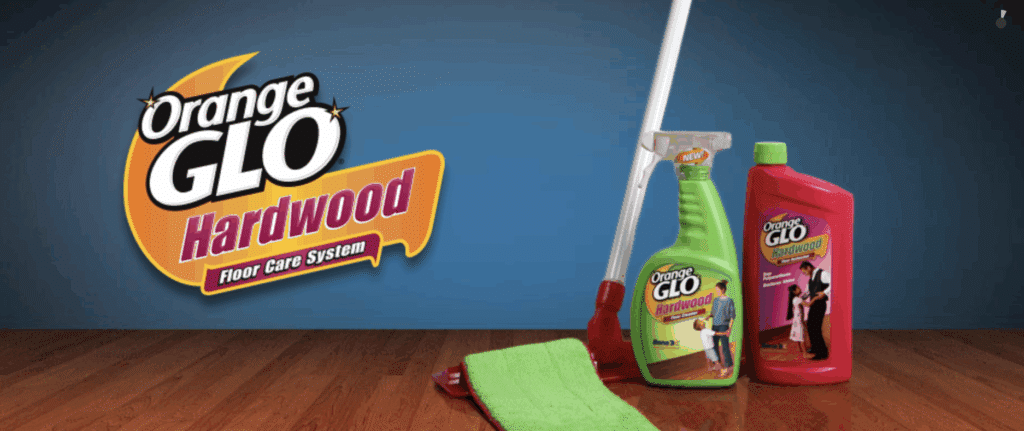
Mop & GloAcrylic floor polishBuilds hazy plastic film, yellows, peels, blocks recoats
Quick ShineAcrylic floor polishSame as Mop & Glo
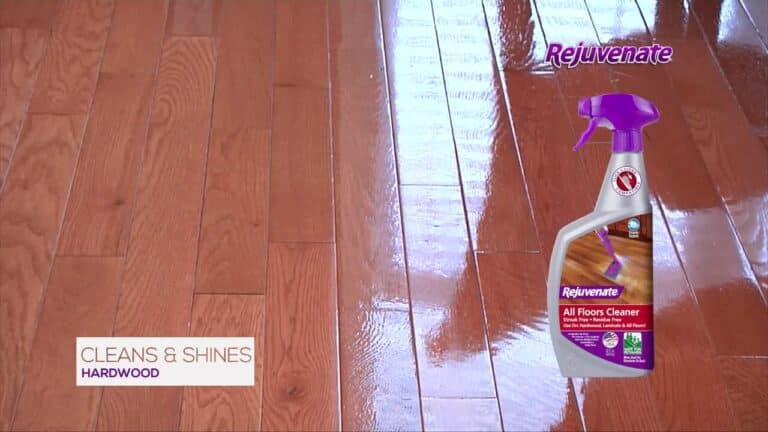
Rejuvenate Floor RestorerAcrylic floor polishSame. Marketed as a fix for dull floors, creates a worse problem
Holloway HouseAcrylic floor polishSame
Pledge (multi-surface and wood)Silicone and oil furniture polishSlick film, attracts dust, contaminates wood for refinish
EndustSilicone spraySame as Pledge
Old EnglishOil and dye blendStains finish unevenly, builds residue
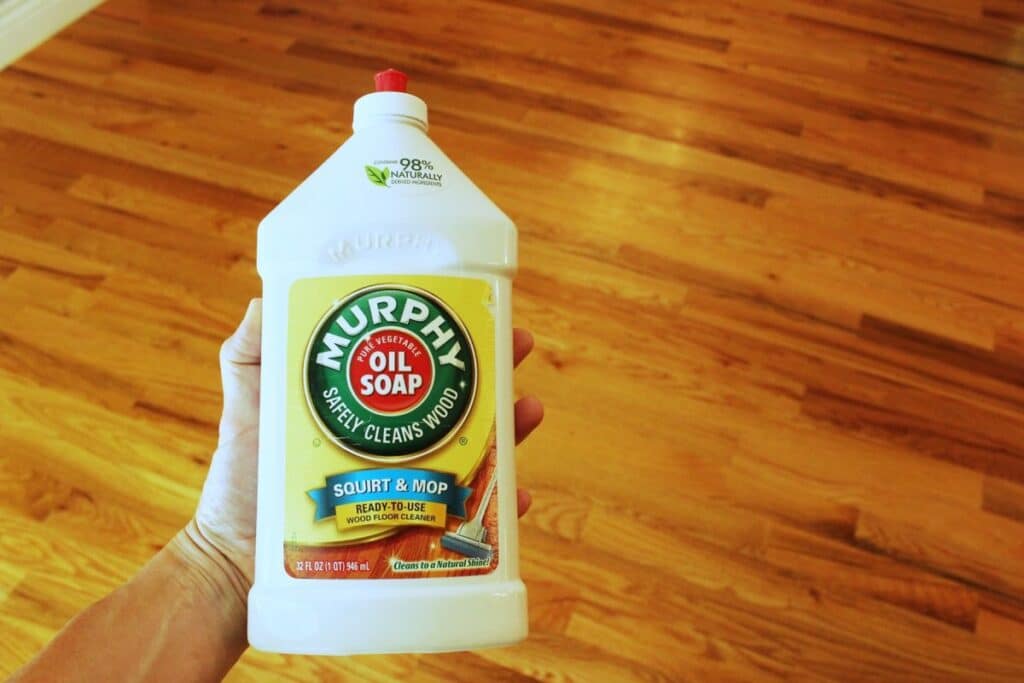
Murphy’s Oil Soap (original)Alkaline soap with vegetable oilBuilds residue on poly, blocks recoats
Vinegar and waterAcetic acid solutionEtches and dulls finish over time
Steam mop (Bissell, Shark, etc.)Pressurized steamLifts finish, drives moisture into seams
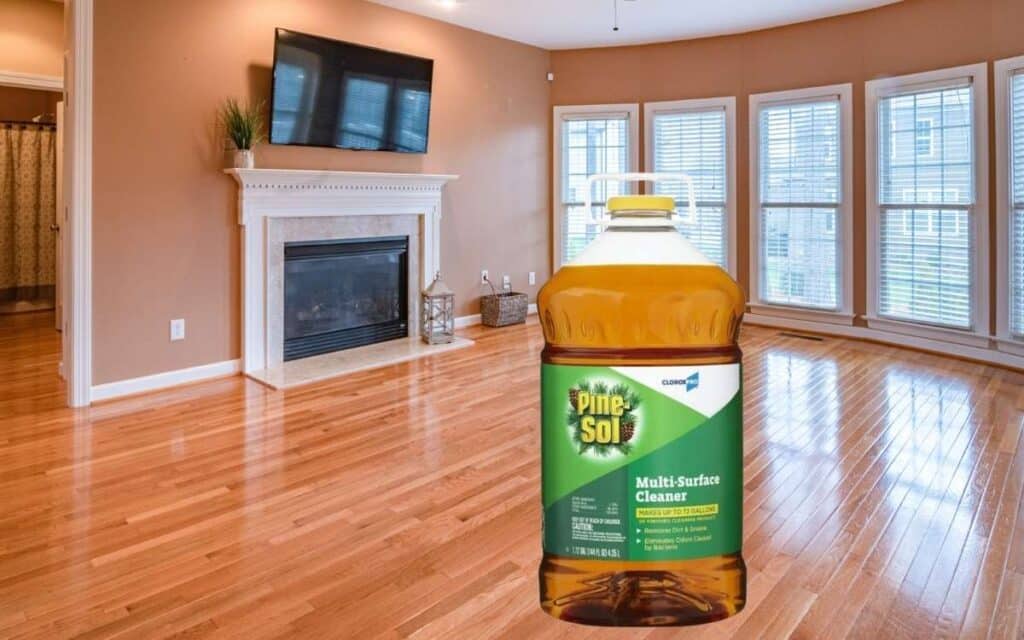
Pine-Sol, Lysol all-purposeAlkaline cleanerStrips and dulls finish, leaves film
Bleach, ammoniaCausticDamages finish, can discolor wood
Swiffer Wet Jet (with included solution)Surfactant blendOften leaves residue, not pH-neutral

Each one has a slightly different failure mode. The acrylic polishes are the most damaging long-term because they build a coating that has to be chemically stripped before a recoat. The oil and silicone sprays are the second worst because the contamination soaks into the wood and shows up as fish-eye in new finish.

Pledge on hardwood floors: why it is a bad idea

Pledge is a furniture polish, not a floor cleaner. It is also not really cleaning anything — it is depositing a thin film of silicone, oils, and waxes that look shiny on day one and attract dust by week two. On floors, that film does three things:

  • Makes the floor slippery, especially in socks
  • Builds a slick layer that pH-neutral cleaners cannot fully remove
  • Contaminates the wood with silicone, which causes fish-eye craters in any new finish

If you have been using Pledge weekly, switch to pH-neutral cleaner now. The buildup will cleaning-down over a few weeks. If you ever plan to refinish, mention the Pledge history to the contractor — silicone contamination is real and may need extra prep work.

Mop & Glo, Quick Shine, and Rejuvenate: the acrylic trap

These three are the most common reason we get called for an acrylic and wax removal job. The pitch is simple: spray it on a dull floor, the floor looks shiny again, the homeowner is happy. The problem is what is happening physically.

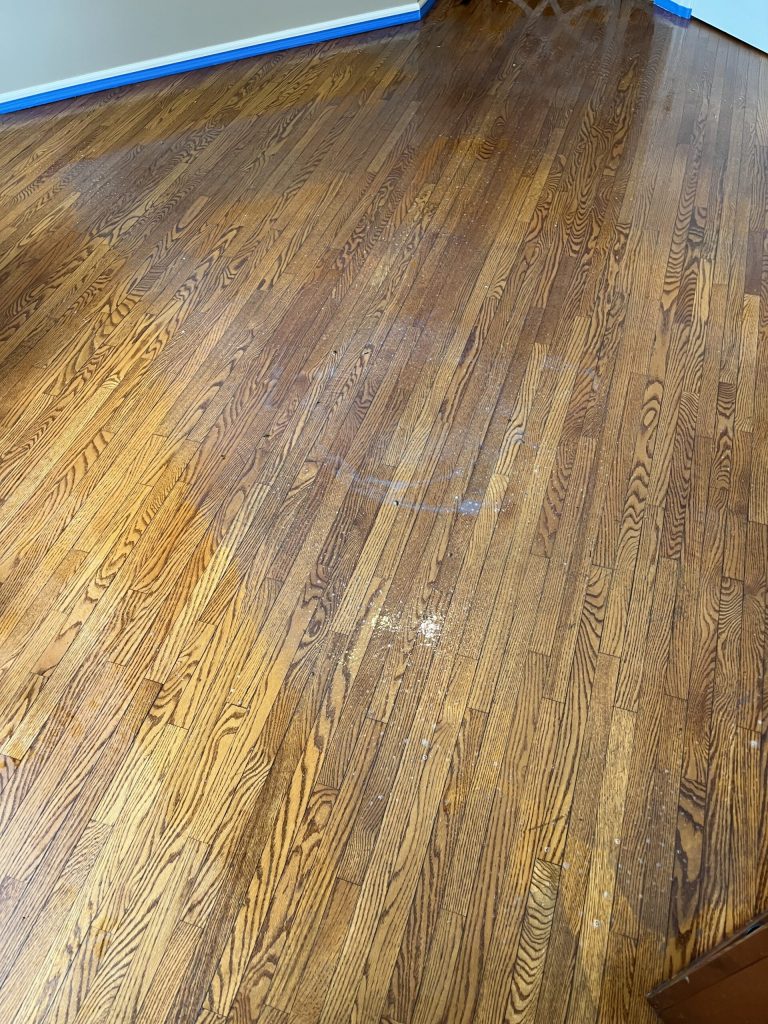
These products deposit a layer of acrylic polymer on top of the polyurethane. Each application adds another layer. Over years, the layers build up to a hazy, yellowing film that:

  • Looks streaky in raked light
  • Yellows under windows where UV cooks it
  • Peels in flakes near baseboards and along seams
  • Prevents new polyurethane from bonding

To remove it, the floor needs an ammonia-based stripper, agitation with a white pad, and multiple rinse passes. There is no shortcut. The “shine” you bought at the store now costs you a stripping job before any refinishing can happen.

Rejuvenate is sometimes marketed as “professional” and sold at higher price points, but the chemistry is the same as the other two. The only honest version of “restoring” a worn floor is a screen-and-recoat by an actual refinisher.

Murphy’s Oil Soap on polyurethane

This is the most argued-about entry on the list, because Murphy’s has been a household name for over a century and our grandparents used it on everything. Here is the precise version:

  • On unfinished, oiled, or genuinely waxed wood, Murphy’s has a real use case. It cleans, lubricates, and adds a hint of oil to floors that need feeding.
  • On polyurethane, none of that applies. Polyurethane does not need oil. The soap residue builds up over years and forms a film that prevents new poly from bonding during a recoat.

If your floor was installed after about 1985 and was finished with polyurethane (which is over 90% of residential hardwood), Murphy’s was probably the wrong choice. Switch to a pH-neutral cleaner. We cover this in detail in Should You Use Murphy’s Oil Soap? and Murphy’s Wood Cleaner vs Oil Soap.

Vinegar and water

Hangs on as folk wisdom. Vinegar is acetic acid, mildly acidic. On polyurethane, it does not “cut grease” the way it does on glass. It slowly etches the finish, dulling it, while leaving the floor smelling like a salad. There is no upside on hardwood. Skip it.

Steam mops

Bissell, Shark, and others all sell steam mops for “deep cleaning hardwood.” They are wrong. Steam is heat plus moisture, and both are enemies of polyurethane. Steam:

  • Lifts the finish from the wood
  • Drives water into seams
  • Leaves cloudy white spots that often will not buff out

Even a single use can damage a finish in a localized spot. Avoid entirely.

What should you use instead?

The list of safe products is short and easy to find:

  • Bona Hardwood Floor Cleaner (the regular one, not the polish)
  • Bona Pro Series Hardwood Floor Cleaner
  • Pallmann Clean
  • Loba Clean
  • Rubio Monocoat Maintenance Cleaner (for oiled floors)
  • A microfiber flat mop, sprayed onto the pad

That is the entire safe list for routine cleaning of polyurethane floors. Apply with a microfiber pad, spray onto the pad not the floor, mop with the grain, let air dry. We cover the full method in Best Cleaning Methods for Wood Floors.

What if you have already been using one of these?

You have not destroyed the floor. You have made the next refinishing more expensive and more involved. The fix:

  • Stop using the bad product immediately
  • Switch to a pH-neutral cleaner
  • For acrylic and wax buildup, plan a stripping job before any recoat
  • For Pledge or silicone contamination, mention it to your refinisher so they can prep accordingly
  • For Murphy’s residue, multiple cleanings with a pH-neutral cleaner will reduce surface buildup over time

The earlier you switch, the cleaner the floor will be when you eventually decide to refinish.

Frequently Asked Questions

What cleaners should you avoid on hardwood floors?

Avoid Pledge, Mop & Glo, Quick Shine, Rejuvenate, Murphy's Oil Soap on polyurethane, vinegar and water, steam mops, all-purpose sprays, and ammonia. All either build up residue, etch the finish, or block future recoats.

Why is Mop & Glo bad for hardwood floors?

Mop & Glo deposits a layer of acrylic polish on top of the polyurethane. Over time it yellows, hazes, peels in flakes, and prevents new finish from bonding. Removing it requires ammonia-based stripping, not normal cleaning.

Is Pledge safe to use on hardwood floors?

No. Pledge leaves a slick silicone-and-oil residue that attracts dust, makes floors slippery, and contaminates the wood for any future refinishing. Use a pH-neutral hardwood floor cleaner instead.

What is the safest cleaner for hardwood floors?

A pH-neutral hardwood floor cleaner from Bona, Pallmann, Loba, or Rubio sprayed onto a microfiber pad is the safest. These leave no residue, do not etch the finish, and do not interfere with future recoats.

Why is Murphy's Oil Soap bad for polyurethane?

Murphy's Oil Soap is alkaline and leaves a soap residue that builds up on polyurethane over years. That residue prevents new finish from bonding, causing recoat peeling. It is also unnecessary on polyurethane because there is no oil to feed.