
product comparisons
Murphy's Wood Cleaner vs Oil Soap: Big Difference
Murphys wood cleaner vs oil soap – the two products are different formulas. Here is which one is safe on polyurethane and which one will cause problems.
It’s the same product… Or is it?
Check out these two bottles of Murphy’s Oil Soap. The one on the left is Murphy’s Oil Soap’s old label design and the one on the right is the new and updated label.
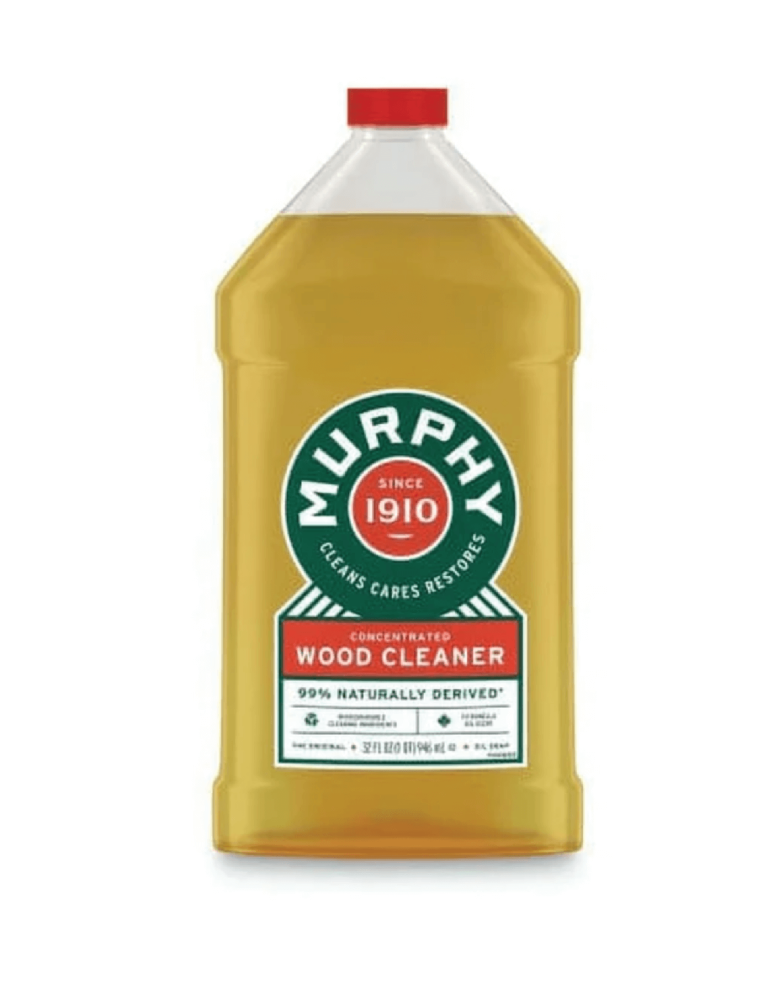
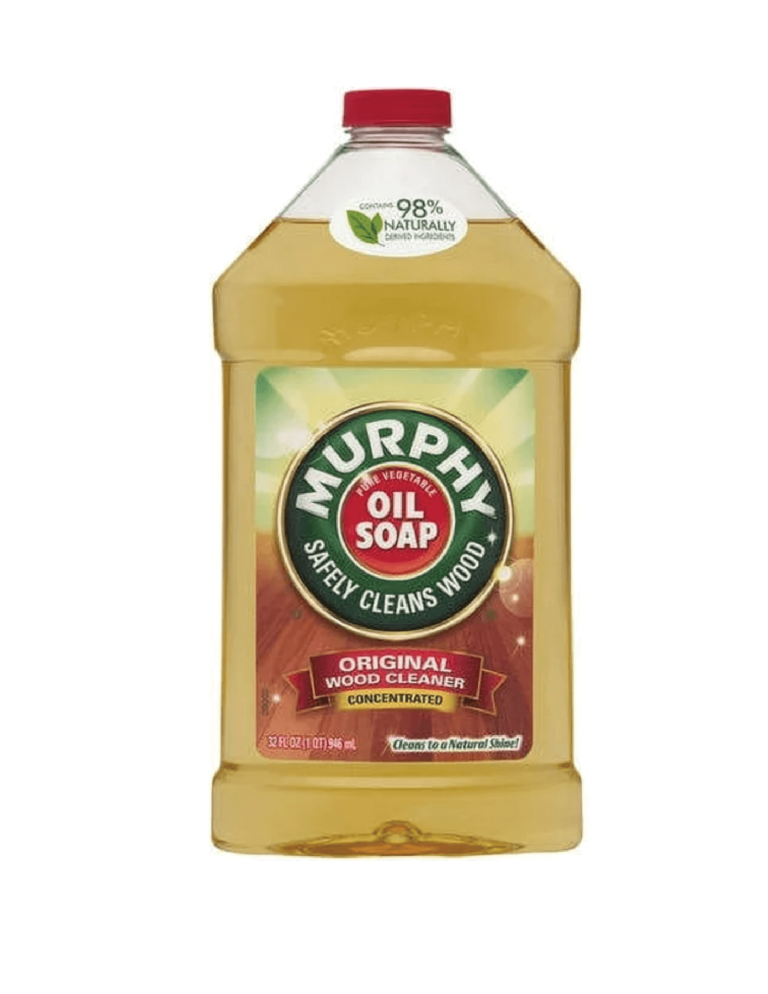
So, what is the difference between Murphy’s Wood Cleaner and Murphy’s Oil Soap? Well, it still seems to be the same product but upon closer inspection, the branding on the bottle has been altered and updated. They’ve ditched the old photo-realistic label and adopted a more minimalist and flat look. It’s a nice update to the visual appeal of the brand and it will certainly compete better on the shelf amongst other modern brands. A question that should be asked is, why would Colgate-Palmolive feel the need to update and change the formula for one of its best-selling and oldest brands?
We can’t answer exactly why Colgate-Palmolive swapped out the formula and changed the branding but we can tell you what their customers think of it – it’s not good.
Before we share the results of our mining through the reviews and comments left by purchasers of this product, let’s do a quick recap on what Murphy’s Oil Soap, and its bad batch of buddies, can do to your wood floor. Some of you by this time may know that the wood floor industry isn’t a fan of these kinds of products and at ReCoat Revolution neither are we. A pH-neutral floor cleaner (like Basic Coatings’ Squeaky Hardwood Floor Cleaner) is all you should ever use to clean your wood floor. This is because products like Murphy’s Oil Soap, Rejuvenate, and many others contain chemicals and plastics that are terrible contaminants to your wood floor. For instance, Rejuvenate contains an ingredient called an acrylic polymer. This acrylic polymer (plastic) is suspended in a liquid state that upon drying encapsulates the surface it has been applied to. The biggest downside to using these types of products as a cleaner is that most consumers do not properly prepare the floor they are putting it on. This means that the acrylic polymer traps and locks in dirt and grime having the opposite effect of cleaning the floor. Another unfortunate consequence of these ‘cleaners’ is that the term acrylic polymer sounds good but in reality, isn’t as durable and long-lasting of a finish as a commercial-grade polyurethane – which is the only type of finish we use to coat wood floors. We have seen countless examples of it getting scratched and worn off in high-traffic areas of the floor. If you need a further explanation of what exactly is occurring when you use one of these products, read our blog on Murphy’s Oil Soap or read our blog on Rejuvenate. Need help getting this junk off your beautiful wood floors? Contact Us Today
Here’s what recent and past customers think of the ‘same old’ formula for Murphy’s Oil Soap.
We combed through the product listing on Walmart’s website for these reviews and were shocked to find so many! Typically, large companies try to suppress these negative reviews to an even greater degree. We found it refreshing to see so many commenters experiencing the same issues and problems our customers have made note of as well when we fixed their wood floors.

4/27/2023
Not Good Wood Cleaner
I received product reimbursement in exchange for my honest review. I tried this wood cleaning oil, which sounded like the perfect product for my hardwood flooring, but after using it my floors looked dull and not shiny, and you could see the streaks from the mop as it dried. For being a product that is designed for wood floors, I thought it wasn’t good at all, and I will stick with my usual cleaner as it actually cleans the wood floors great. I also didn’t really like the smell. I would not recommend this product.
– ChefMesh
3/27/2021
Improved formula is no improvement
I’ve used Murphy’s Oil Soap on my hardwood floors and hallway ceramic tile for years. When I recently ran out, I got a new bottle, this time the “improved” version. I used exactly the same way as I always have and was immediately surprised that I needed a bit more “push” to spread the product. Even worse, when dry, my floors didn’t have that shiny look I’ve come to expect but rather looked dull and hazy. It’s funny because I apparently missed a spot, and the old “dirty” spot is shinier than the new “clean” areas. Bring back the old formula!!
– Chris
12/1/2021
dull and dirty
dont like how it left my floors. left streaks everywhere and looked more dull then before cleaning them. bought a whole new mop thinking that was the problem but nope, it was this stuff.
– anonymous
12/31/2023
No More Murphy’s Oil Soap
Palmolive Colgate is misleading customers into buying an inferior product without their knowledge. It appears the manufacturer has chosen not to properly inform customers that they are not buying original Murphy’s Oil Soap nor why it is no longer available.
– Reason?
9/2/2022
Not Happy
Purchased a bottle of the so called “NEW FORMULA” Very Very Disappointed with the new formula, ABSOLUTE GARBAGE!!! Will no longer purchase your products. Used and loved the ORIGINAL MURPHY OIL SOAP!!!! Hopefully enough feedback will make you return to the original formula.
– Julie
2/22/2021
Used to be my favorite, new formula is terrible
The new formula makes my floors look sad. I was so excited years ago when I found this product. It made my floors beautiful for years. Today is the 2nd or 3 time I used the new formula of murphy’s oil soap and the beautiful sheen that the old formula of murphy’s oil soap gave my floor is gone and I’m so sad. I can see scratches in the floor I didn’t even know existed and can even see the outline of rugs that were on the floor from a previous owner that I have never seen before today. If the formula doesn’t change back I have no reason to purchase again and I have to look for a new product.
– Gia
These are only six reviews out of the 159 1-star reviews listed for Murphy’s Oil Soap!
If you’re interested in reading more of these honest reviews and seeing how the official Murphy’s Oil Soap reps responded to the complaints and points being raised click here. Using any of these cleaners for your floors is usually unnecessary. At worst, you really only need a pH-neutral cleaning solution to break up grease and grime in kitchens around stoves and near doors/high-traffic paths through the house. Otherwise, regular diligent sweeping, vacuuming (buy a Nilfisk GD930 HEPA Vacuum or a ProTeam QuietPro BP HEPA Backpack Vac), and mopping (buy an O-Cedar EasyWring RinseClean Microfiber Spin Mop & Bucket or a Swiffer WetJet Hardwood and Floor Spray Mop Cleaner Starter Kit) will solve most of your problems when it comes to dirty floors. All-in-one, no-hassle, cleaners that seem to be too good to be true are most often just that, too good to be true. Don’t fall for their scam!
Our Verdict for the new Murphy’s Oil Soap: The new stuff is just like the old stuff 👎👎
If you still have a bottle of Murphy’s Oil Soap, it’s time to send it packin’! Even if the formula hadn’t been altered and rendered functionally useless, we still wouldn’t recommend using it on your hardwood floors. We have saved hundreds of homes from the problems this product creates. If you want to put things in reverse and need our help getting rid of it, contact us today to see how our Acrylic Wax Removal Service can help you.
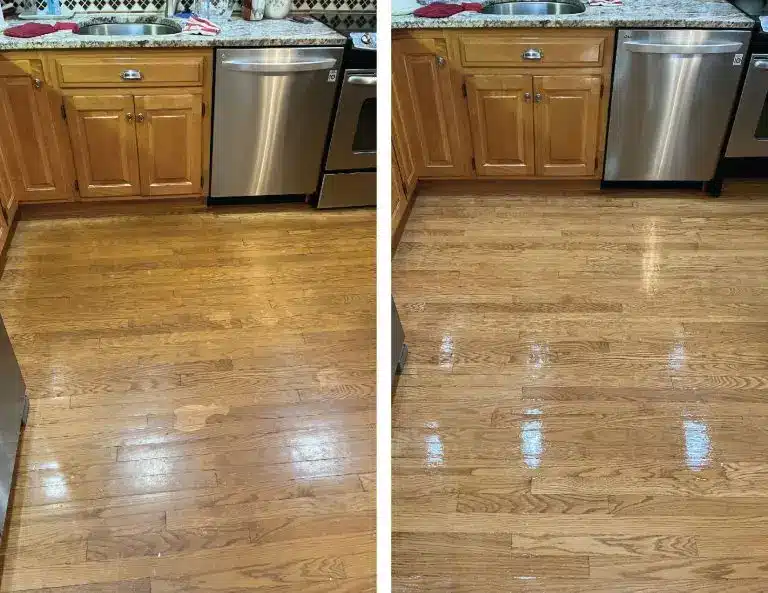
ReCoat Revolution is the best solution to Murphy’s Oil Soap.
Why? Because one out of every three jobs involves us removing it from a floor. Most people don’t even know what they’re doing when they squirt some Murphy’s Oil Soap onto their floor but we know exactly how to get it off for you.
At ReCoat Revolution, we provide complete hardwood floor care. Need to show a 100-year-old floor some love? Good, we love saving old floors. Are your floors youngsters but a little banged and bruised from the dog’s nails? We’ve seen it a million times. With over 25 years of experience in and around the wood floor business, we know our stuff and we’re happy to share it with you if the price is right! 😉
Are you ready to bring your floors back to life with our easy, result-based process? Contact us now to get the help you need!