
recoating education
Buff and Coat vs ReCoat: Same Hardwood Job?
Buff and coat vs ReCoat: learn why the terms can describe different preparation standards, what a credible bid includes, and what the service should cost.
Most people are naming the same job—but the process can be different
Buff and coat, screen and coat, screen and ReCoat, and maintenance coat are usually different names for the same basic category: refresh the existing wood finish without sanding the floor to bare wood.
This post is not the Clean ReCoat Process versus a full sand refinish debate. If you are deciding whether your floor needs maintenance or full restoration, read our ReCoat vs refinish guide. This page is for homeowners comparing bids and trying to decode the language.
The words matter less than the process.
What a real buff and coat should include
A credible buff-and-coat job has four parts:
- Inspect the floor and identify disqualifying damage.
- Remove soil and surface residue.
- Mechanically abrade the existing floor surface.
- Apply a finish in the chosen sheen.
If a bid skips the cleaning conversation, be careful. Abrading a dirty or polish-contaminated floor does not make it clean. It can grind contaminants into the surface and leave the new finish bonded to the wrong thing.
This is why ReCoat Revolution treats cleaning, contamination checks, and prep as part of the process, not optional extras.
What the terms usually mean
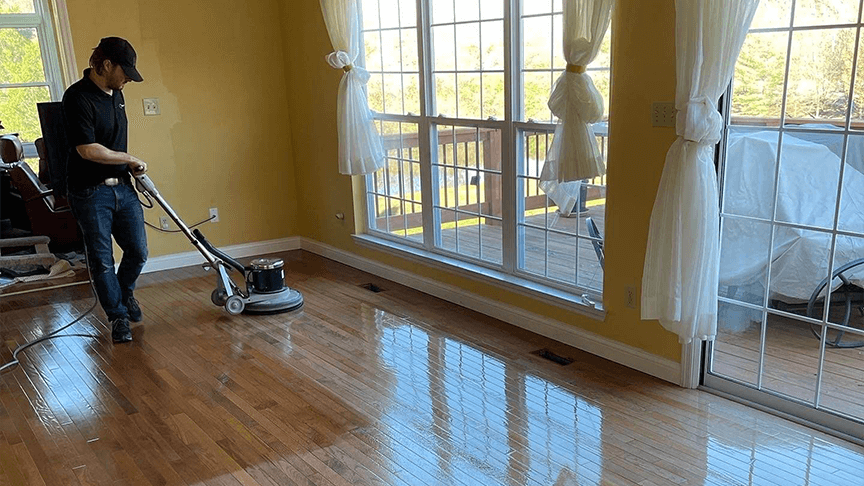
“Buff and coat” is the older homeowner phrase. It usually means a buffer is used to abrade the finish before a coat goes down.
“Screen and ReCoat” is more technical. A screen is an abrasive mesh used to scuff the existing finish. It does not remove the floor color or sand the floor flat.
“Maintenance coat” is industry language. NWFA refinishing guidance describes a maintenance coat as cleaning, lightly sanding, and applying a new finish layer.
“Clean ReCoat Process” is the service name we use for our dust-free, sandless maintenance process. This revolutionary process seals and protects the floor while addressing inconsistent color and wear patterns.
The bid comparison questions that actually matter
When two contractors use different words, do not argue vocabulary. Ask better questions:
- What do you do if the floor has wax, Mop & Glo, Quick Shine, Rejuvenate, or oil soap on it?
- Do you perform an adhesion test when the product history is unclear?
- Is deep cleaning included, or are you only screening and coating?
- What finish are you applying?
- How long before light foot traffic, furniture, dogs, rugs, and normal cleaning?
- What floor conditions make you recommend sanding instead?
Those answers tell you more than the label on the estimate.
What buff and coat will not fix
Buff and coat is maintenance. It can improve dullness, light scratches in the finish, mild traffic wear, and loss of sheen. It can add a new protective layer before the floor wears through. The finish may not adhere to the floor long-term, but it will provide a shine as long as it lasts.
It will not remove black pet stains, deep gouges, board movement, cupping, water damage, peeling failed finish, or a color you no longer like. It will not turn red oak into white oak. It will not erase bare wood exposure in gray traffic lanes.
If bare wood is already showing, the maintenance conversation often changes. That floor needs an in-person evaluation before anyone promises that another finish coat will solve it.
What should it cost?
For a typical 1,000 sq ft home, a professional Clean ReCoat Process usually costs $1,500–$3,000. Cost changes with furniture moving, stairs, heavy buildup, tight layouts, repairs, and whether acrylic or wax removal is needed first.
If a bid is dramatically cheaper, ask what is missing. If a bid is dramatically higher, ask whether they are actually quoting a full sanding job.
Honest limits: the best name does not save a bad process
A contractor can call the job a “ReCoat” and still do poor prep. Another contractor can call it a screen and coat and do excellent work. The language is useful only if it leads you to the right questions.
The floor has to be clean. The existing finish has to be stable. The new finish has to be compatible. And the floor has to be in the right condition for maintenance instead of restoration.
If you want a bid that explains the process instead of hiding behind terminology, contact ReCoat Revolution and ask whether your floor is a ReCoat candidate.