
recoating education
What Is ReCoating Hardwood Floors? Plain-English Guide
What is ReCoating hardwood floors? The plain-English floor ReCoat definition: a new finish layer applied over the existing finish, no sanding, done in one day.
Floors are crucial to the beauty and functionality of any space, but even the most well-maintained surfaces can lose their luster over time. ReCoating a floor is an efficient, practical solution to restore its appearance and protective qualities without the extensive labor or cost of refinishing or replacement. Unlike the initial application of a floor coating, which starts with a bare or newly installed surface, ReCoating works by revitalizing the current finish by applying a fresh protective layer to the existing surface, enhancing its appearance and durability.
In this blog, we’ll explore everything you need to know about ReCoating floors, from understanding the process and its benefits to recognizing when it’s time for a ReCoat. Whether you’re a homeowner looking to maintain your investment or a business owner prioritizing durability, we’ll provide the insights you need to make informed decisions about your floor care.
Why Is ReCoating Necessary?
Restoring Protection and Appearance
Over time, even the most well-maintained floors can lose their luster and protective qualities. Scratches, dullness, and minor damage can compromise the floor’s aesthetics and durability. ReCoating restores the vibrant finish while adding a layer of protection against future wear. This preventive measure helps delay the need for costly refinishing or replacement.
Cost-Effective Maintenance
ReCoating is an affordable alternative to floor replacement or full refinishing. While refinishing involves extensive sanding and material application, ReCoating focuses on refreshing the surface, making it a budget-friendly option for maintaining high-traffic or aging floors.
Types of Damage That ReCoating Addresses
ReCoating addresses surface-level imperfections like scuffs, light scratches, and dull finishes. It smooths out minor wear and tear, enhancing the floor’s appearance. However, for deeper gouges or damage that exposes the wood or substrate beneath the finish, refinishing may be required to restore the floor’s integrity.
The ReCoating Process for Floors
Step-by-Step Process of ReCoating:
- Inspection and Assessment: Examine the floor for damage and determine its suitability for ReCoating.
- Surface Cleaning: Thoroughly clean the floor to remove dirt, grease, and debris that could interfere with the new coating.
- Abrasion/Screening: Lightly abrade the surface using a screen or buffer to ensure the new coat adheres properly.
- Dust Removal: Remove any residue or dust created during the abrasion process using a vacuum or tack cloth.
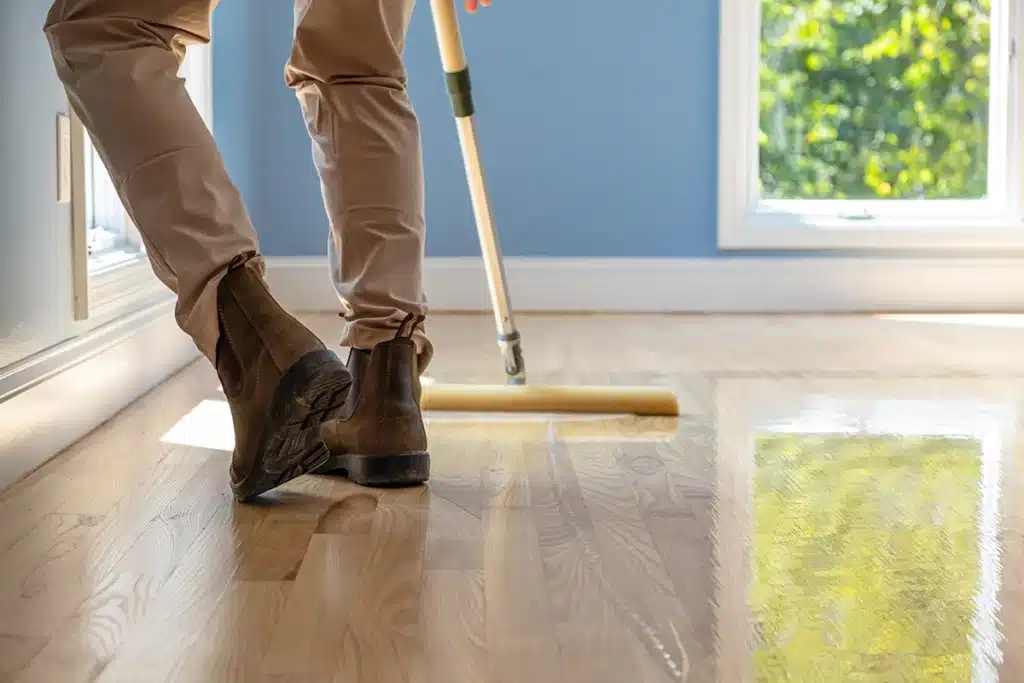
- Application of Coating: Apply a thin, even layer of the selected ReCoating product using a roller or applicator.
- Drying Time: Allow the coating to dry fully, adhering to the manufacturer’s recommendations for curing time.
- Inspection and Buffing (if required): Perform a final inspection and, if needed, buff the surface for a uniform finish.
Benefits of ReCoating
Longevity and Durability:
ReCoating reinforces the protective layer on your floor, allowing it to withstand heavy use and environmental wear. This extends the floor’s overall lifespan, minimizing the need of frequent repairs or replacements.
Enhanced Aesthetics:
ReCoating revitalizes the surface, restoring its original beauty and sheen, whether it’s a hardwood, laminate, or engineered floor. This improvement can dramatically enhance the overall appearance of a room.
Improved Protection:
Adding a fresh coat strengthens the floor’s defense against moisture, dirt, UV rays, and other factors contributing to deterioration. This protection ensures the floor remains functional and attractive over time.
Environmental Benefits:
ReCoating aligns with sustainable practices by prolonging the life of existing floors. By avoiding premature replacements, you reduce waste and the environmental impact associated with manufacturing and disposing of new materials.
How Often Should You ReCoat?
Factors That Affect ReCoating Frequency
The need for ReCoating depends on several factors, including:
- Foot Traffic: High-traffic areas may require more frequent ReCoating
- Exposure to Elements: Floors in sunlit areas or exposed to moisture may degrade faster
- Type of Finish: Some finishes are more durable and require less maintenance
Signs That ReCoating is Needed
How do you know when it’s time to ReCoat? Here are some key signs to watch for:
- Dull or Faded Appearance: One of the most noticeable signs is a loss of shine or vibrancy. Over time, daily wear, sunlight, and environmental factors can cause the finish to look dull or uneven. If your floor no longer has the bright, polished look it once did, a ReCoat can restore its beauty.
- Scratches and Scuff Marks: Minor surface damage such as scratches or scuff marks are natural with regular use, especially in high-traffic areas. While deeper scratches may require refinishing, most light or superficial damage can be effectively concealed with a ReCoating process.
- Reduced Water Resistance: If spills are no longer beading on the surface and instead are soaking into the floor, it’s a clear indication that the protective layer has worn thin. This lack of water resistance can lead to further damage, including warping or staining, if not addressed promptly.
- Uneven Texture or Discoloration: Uneven wear, discoloration, or patches where the finish has worn away are signs that the floor is no longer uniformly protected. This is often the result of concentrated foot traffic in specific areas, such as entryways or hallways.
- Stains that Don’t Wipe Away: When spills or marks can no longer be easily cleaned, it may be due to the deteriorating finish exposing the raw material beneath. A new coat can act as a barrier against future stains and simplify cleaning.
- Age of the Current Finish: Even if your floor looks relatively good, finishes naturally degrade over time. If it has been several years since the last ReCoating, it might be time to schedule a refresh to maintain the floor’s structural integrity and appearance.
Tips for a Successful ReCoating Job
Preparing the Surface
Proper surface preparation is the foundation of a successful ReCoating job. Skipping or rushing through this step can lead to poor adhesion, uneven application, or a finish that doesn’t last as long as it should.
Start by thoroughly cleaning the floor to remove dust, dirt, and oils that could interfere with the coating. Any debris left behind will become trapped under the new layer, potentially causing unsightly bumps or bubbles. Light sanding may also be necessary for hardwood floors to create a smooth, uniform surface that allows the new coat to bond effectively.
Neglecting preparation can lead to peeling, flaking, or uneven coverage, all of which detract from the appearance and durability of the floor. Taking the time to prepare ensures the ReCoating process goes smoothly and delivers a professional-quality finish.
Choosing the Right Coating
Selecting the correct coating for your floor is crucial for achieving the desired results and ensuring the new finish stands up to the demands of its environment. Here are some key factors to consider:
- Durability: High-traffic areas like hallways or commercial spaces require a more robust coating that can withstand heavy wear, while low-traffic areas may benefit from a lighter, more economical option.
- Finish: Decide whether you want a glossy, matte, or satin finish based on the style and functionality of the space. A glossy finish may enhance the vibrancy of the floor, while a matte finish can provide a more understated, modern look.
- Environmental Conditions: Consider factors like humidity, temperature, and exposure to sunlight. For example, UV-resistant coatings are ideal for rooms with significant natural light, while moisture-resistant finishes are better for areas prone to spills or dampness.
- Material Compatibility: Ensure the chosen coating is suitable for your floor type, whether it’s hardwood, laminate, or another material. Using the wrong product can lead to poor performance or even damage to the surface.
Consulting a professional can help you choose the best product for your floor’s unique needs, avoiding costly mistakes and ensuring a long-lasting finish.
Avoiding Common Mistakes
Even seemingly small mistakes during the ReCoating process can lead to significant aesthetic or functional issues:
- Applying Too Thick a Coat: A thick layer of coating might seem like it would offer better protection, but it often leads to uneven drying, bubbling, or a tacky surface that can attract dust and dirt.
- Skipping Proper Drying Times: Rushing the drying process can result in smudges, an uneven finish, or compromised durability. Allow adequate time between coats and before using the floor to ensure optimal results.
- Improper Application Tools or Techniques: Using the wrong tools or failing to follow product instructions can cause streaks, lap marks, or incomplete coverage, leaving the floor looking worse.
These mistakes can ruin the look of your floor, requiring additional work to fix–or, worse, requiring a full refinishing. This is why hiring professionals is often the best choice. They have the tools, experience, and expertise to ensure your floor is prepared, coated, and finished correctly, saving you time and money in the long run.
Frequently Asked Questions About ReCoating Floors (FAQs)
How long does ReCoating last?
The longevity of a recoated floor depends on several factors, including the type of coating used, the level of foot traffic, and the care it receives. On average, a well-applied ReCoat can last anywhere from three to seven years in residential settings.
This timeframe may be shorter in high-traffic commercial spaces, as constant use can wear down the finish more quickly. Environmental factors, like exposure to sunlight or moisture, can also impact durability. Choosing a high-quality coating and performing regular maintenance, like cleaning and avoiding abrasive cleaners, can help extend the lifespan of your recoated floor.
Can I ReCoat over old paint?
ReCoating over old paint is possible, but only if the existing surface is properly prepared. This means cleaning the surface to remove dirt, grease, or any contaminants that could prevent adhesion. Sometimes, sanding or lightly scuffing the surface is necessary to create a better bond for the new coating.
If the old paint is peeling, chipping, or flaking, it’s crucial to address these issues first. Applying a new coat over an unstable base will only exacerbate the problem, causing the fresh layer to fail prematurely. Additionally, not all coatings are compatible with every type of paint, so it’s essential to verify product compatibility or consult a professional before proceeding.
What’s the difference between ReCoating and refinishing?
ReCoating and refinishing are both methods of floor maintenance, but they serve different purposes and involve varying levels of work:
- ReCoating adds a fresh layer of protective finish to the surface without removing the existing one. It addresses minor wear and tear, restoring the floor’s appearance and durability while preserving the underlying material.
- Refinishing involves sanding down the surface to remove the old finish and any deeper scratches or damage. Afterward, a new finish is applied, giving the floor a fresh start.
ReCoating is less invasive, more cost-effective, and quicker than refinishing hardwood floors, making it ideal for floors with light to moderate wear. However, refinishing may be the better option if the floor has significant damage. For a more detailed comparison, check out our blog on ReCoating vs. Refinishing.
Choose the appearance you want
Compare matte and satin finish to decide how much reflection you prefer. If you like the existing color, our guide to changing sheen without bare-wood sanding explains the qualification and preparation questions.
Ask The Experts For Help
ReCoating is a cost-effective and eco-friendly way to maintain and enhance the look of your floors. This process offers many benefits, from restoring beauty to improving durability. For professional ReCoating services tailored to your needs, contact the professionals at ReCoat Revolution today and let us help you protect your investment!