
recoating education
How to Fix Faded Hardwood Floors: UV Fade & Rug Outlines
How to fix faded hardwood floors: tell UV fade from polyurethane ambering, fix rug outlines, and know when ReCoat works vs full refinish.
Wood Floors and Sun Damage
Because wood is a natural product, it is vulnerable to environmental changes and exposure to light. When exposure to these changes impacts the appearance of a wood floor, certain options are available to repair and correct the changes in appearance. Determining the best solution before hiring a professional can save you time and money.
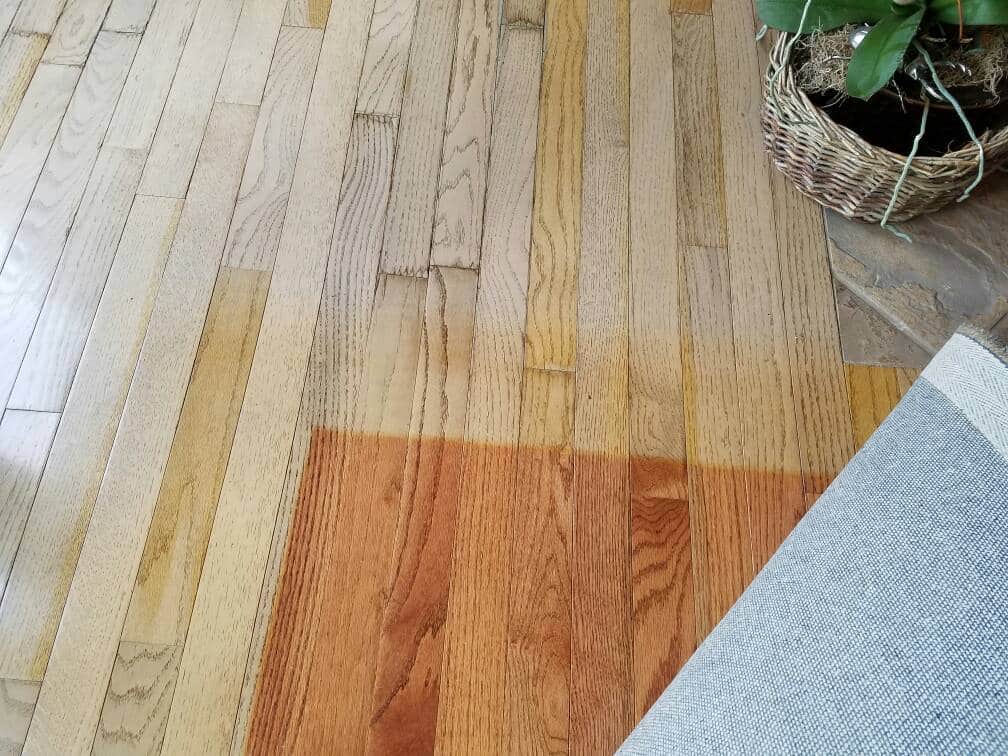
All wood floors are susceptible to the effects of ultraviolet light (UV) rays from the sun and, as a result, are likely to fade or lighten in color over time. Like getting a “farmers tan”, the wood floor’s ongoing exposure to UV increases may cause permanent fading which often penetrates up to 3 mm deep into the wood grain. It is important to understand the proper care and maintenance for wood floors as well as the options for repairing the damage done by sunlight to wood flooring.
How to Prevent Sun Damage to Wood Floors
In most cases, fading and visible lines from sun exposure cannot be fully removed. Window treatments that block UV are recommended to mitigate the progression of fading and color loss. If area rugs are part of your decor, we recommend moving them around every so often (monthly) so that you evenly age the wood floor exposing different areas to similar UV levels. This rotation of rugs helps minimize the harsh sunburn lines on wood flooring.
Proper care and maintenance also protects floors from the occurrence of sun damage. Many wood floor finishes, whether oil- or water-based, contain UV inhibitors limiting the amount of UV that reaches the wood’s surface. Similar to tinting on car windows, the UV inhibitors protect the wood from fading and damage. It is recommended that wood floors are recoated every 3-5 years with a new coat of finish to ensure they are fully protected and preserved.
Caring for Wood Floors
Using the correct cleaning products and methods ensures your wood floor’s ongoing protection and beauty. The use of harsh chemicals or cleaners may damage and diminish the beauty and feel of your wood floors.
Use of the following products is not recommended:
- Soaps, oils, waxes, vinegar, or chemical sprays
- Alkaline cleaners, ammonia, bleach, or abrasive cleaning agents
- Quick-shine or retail quick-finish products
Use the following products to clean wood floors to ensure long term beauty:
- Plain, hot water with an 18” string mop and janitorial bucket/wringer
- Dry mop or damp mop and dry with a beach towel or air dry
- Use a pH-neutral cleaner if a cleaner is necessary
If you are unsure how to remedy harsh color fading as a result of UV exposure, contact ReCoat Revolution where color-correcting technology is used to help assist in hiding harsh color differences and lines occurring from sun damage.
Repair of Sun Damage to Hardwood Flooring
Several options are available for restoring hardwood floors that have been damaged. If your wood floors have not been cleaned or maintained for many years and the finish is deeply scratched, discolored, and damaged, a total refinish by sanding to bare wood may be the best choice for restoring the beauty to your wood floor. On the other hand, if your hardwood floors are not severely damaged or discolored, the Clean ReCoat Process which cleans them thoroughly followed by a fresh coat of finish is applied. Preventative maintenance is the best measure by applying fresh coats of finish before your wood floors require sanding to bare wood.
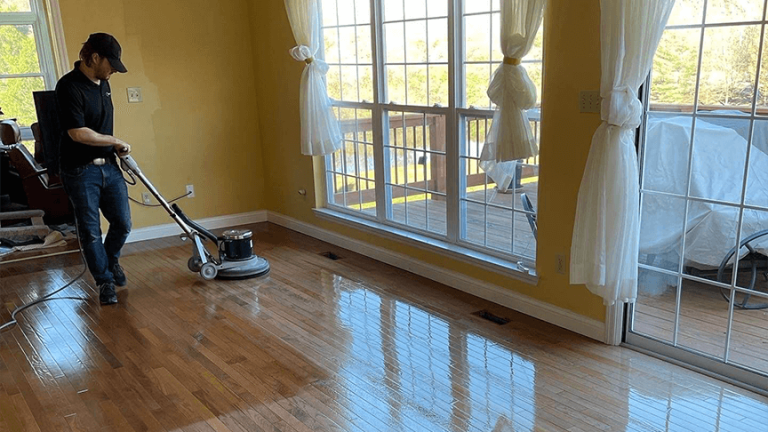
The hardwood floor refinish process from ReCoat Revolution can be completed in only a day with no dust or mess at a cost that is a fraction of that of traditional wood floor refinishing! Additionally, the Clean ReCoat Process is environmentally-safe and does not contain harmful fumes or odors. First, we vacuum and scrape your floors to collect all dirt and debris. After surface cleaning the wood floors, we power-scrub and deep clean them, killing mold, bacteria, and viruses (including Covid-19). Lastly, wood floors are sealed and protected with our special blend of durable, commercial-grade polyurethane. Voila! Beautiful, restored, and refinished wood floors in only a day that are protected for years to come.
Prevent the next color difference
Use our sun-protection guide to reduce uneven exposure after repair. If the concern is an overall warm tone, our orange-floor guide separates lighting, wood, stain, and aging finish.
A Little About ReCoat Revolution
Our St. Louis floor refinishing services provide complete hardwood floor care. Need to show a 100-year-old floor some love? Good, we love saving old floors. Are your floors youngsters but a little banged and bruised from the dog’s nails? We’ve seen it a million times. With over 25 years of experience in and around the custom wood floor business, we know our stuff and we’ll share it with you if it’ll help you solve a problem you have.
Are you ready to bring your floors back to life with our easy process? Contact us now to get the help you need.