
recoating education
Dustless Hardwood Floor Refinishing Explained
Dustless hardwood floor refinishing means HEPA containment or chemical abrasion. Here's what's actually dust-free vs dust-reduced – and when each is right.
One of the biggest questions we get at ReCoat Revolution is whether or not our dustless wood floor refinishing process involves sanding or dust. We always excitedly answer no. We can transform your floor with no sanding and no dust!
We understand that creating a fine layer of dust throughout someones house because they chose to have their floor sanded would be a massive hassle. That is why our unique process is so special. Our Clean ReCoat Process is 100% dust-free hardwood floor refinishing!
Q: How can we effectively and efficiently refinish your floors without sanding?
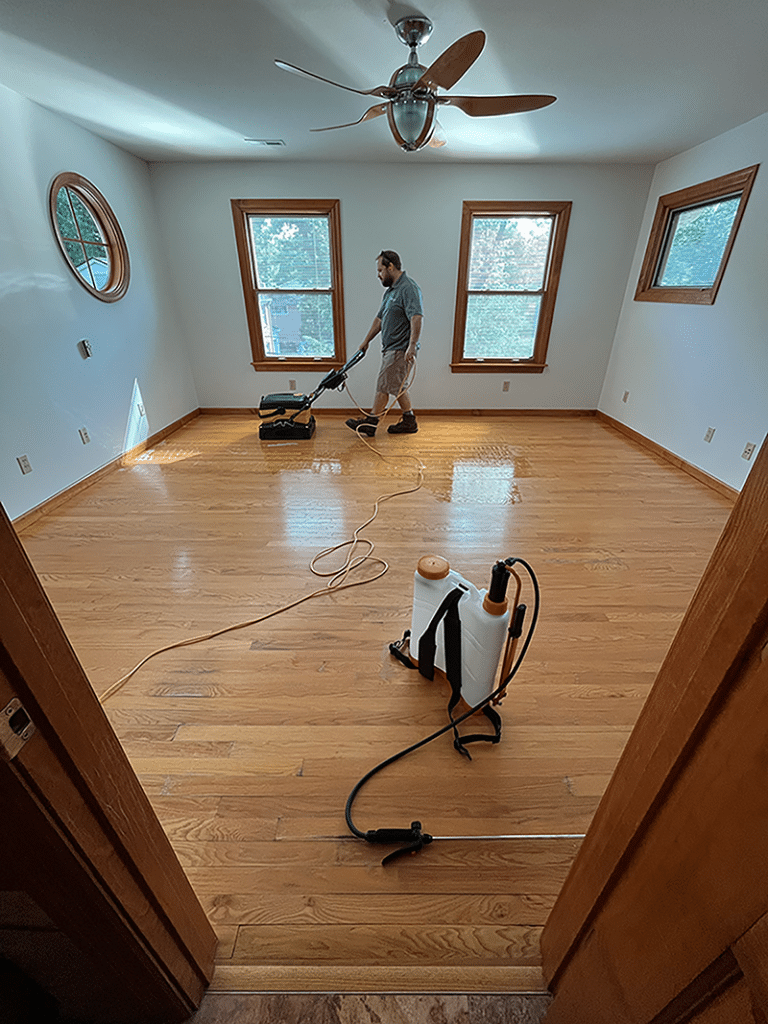
A: Our technicians describe our process similar to wet sanding – this means that there is absolutely no dust created during our Clean ReCoat wood floor refinishing process in your home. We use a deep cleaning machine that removes layers of wax build-up, dirt, and debris from your wood floor, leaving the wood floor clean of all contaminants while creating no dust.
Dustless Wood Floor Refinishing and ReCoat Revolution
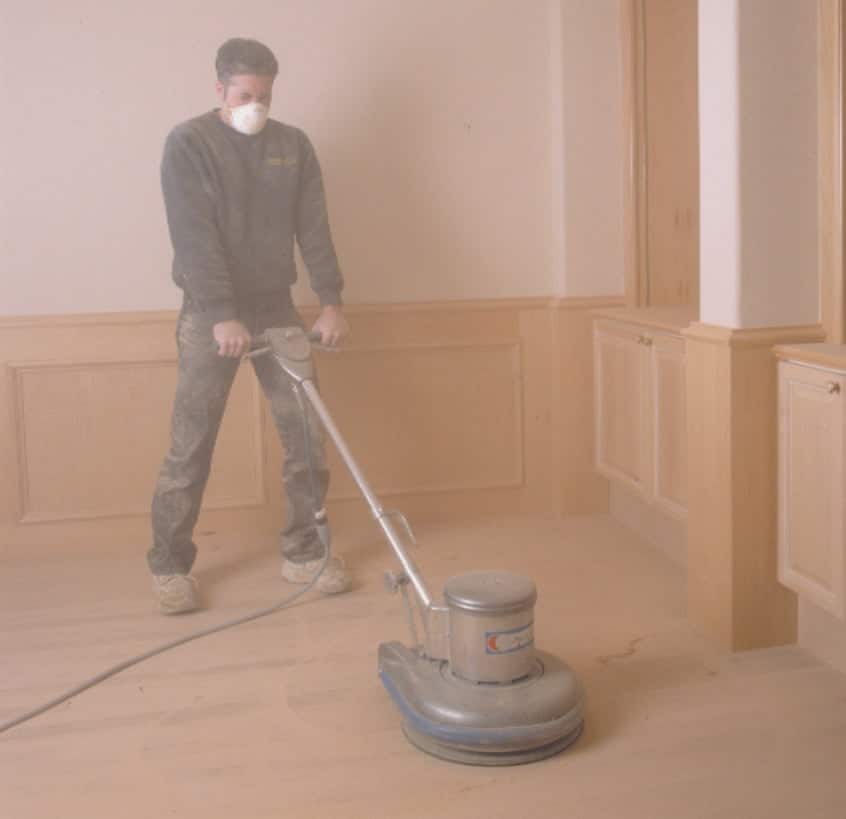
Our service differs from traditional wood floor refinishing in several important ways. Traditionally, floor refinishing companies have addressed any issue with wood floors whether big or small by fully sanding the wood floor to bare wood removing all the finish and stain. This method removes all character as well as a layer of the wood itself making the floor less sound.
The process of fully sanding the wood floor to bare wood also removes deep scratches and surface damage. The traditional wood floor refinishing process produces a lot of dust from the wood as well as making the components of the finishes, stains, etc. airborne. There are steps that can be taken to minimize and eliminate dust but we’ve found that many companies have a loose definition of ‘dust-free refinishing’.
ReCoat Revolution does it better! Our process does not penetrate to bare wood. it instead focuses on the surface of the floor where we deep clean and wet sand the uppermost layer of your floors to remove all dirt, grime, and contaminants. The Clean ReCoat process removes the exposure you and your family have to the dust and air-borne contaminants that are created during the traditional method of refinishing wood floors. Additionally, ReCoat Revolution does not sacrifice the soundness of your wood floors and remove layers of wood through the sanding process.
Not only does a total refinishing project take much longer, but it’s also more costly. Our process is cleaner and faster and safer for your family which results in both cost savings to you as well as convenience. ReCoat Revolution is often only a fifth the price of traditional wood refinishing – best of all is completed in just one day.
A Sanding-Free Process
As we have discussed, our technicians describe the Clean ReCoat Process as a kind of wet sanding. This means we deep clean your floors with a pH-neutral cleaning solution using our equipment to fully extract contaminants, bacteria, and other elements that are harmful to your family. Our process is environmentally friendly and does not release any harmful fumes or VOCs into your home.
After this removal, your floor is gently buffed to ensure a smooth and seamless floor. The floor is then coated with our commercial-grade water-based polyurethane finish. All of our products have been created by us to produce a final result that is timeless and durable, protecting your beautiful wood floors for years to come.
At ReCoat Revolution, we provide complete hardwood floor care. Need to show a 100-year-old floor some love? Good, we love saving old floors. Are your floors youngsters but a little banged and bruised from the dog’s nails? We’ve seen it a million times. With over 25 years of experience in and around the wood floor business, we know our stuff and we’re happy to share it with you! 😉
Are you ready to bring your floors back to life with our easy dustless wood floor refinishing process? Contact us now to get the help you need!