
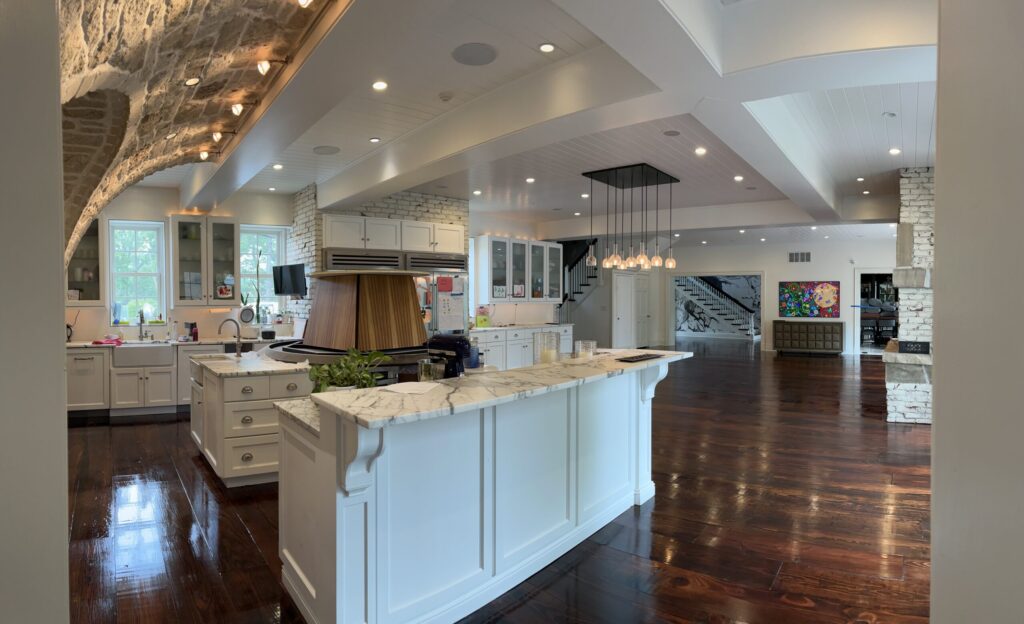
Your floors are restored in ONE DAY with NO DUST.
ReCoat Revolution

buyer guides

Save Old Hardwood Floors Without Replacing Them

How to save old hardwood floors without replacing them: dust-free recoating restores worn finish in one day at a fraction of refinish cost.

Published

For decades, the only real way to save old hardwood floors without replacing them was a full sand-and-refinish: a multi-day project involving heavy machines, drum sanders biting into your boards, dust drifting into HVAC vents, and the entire family relocating for the better part of a week. It worked, but the price was real—both in dollars and in disruption. Most homeowners waited until the floor looked truly bad before pulling the trigger, by which point the wood had already lost more thickness than it needed to.

There is now a better path for most floors. It is called dust-free recoating, and when your floor qualifies for it, the math changes completely.

How Do You Save Old Hardwood Floors Without Replacing Them?

You save old hardwood floors without replacing them by recoating instead of refinishing. A dust-free recoat lightly abrades the existing polyurethane, then applies a new bonding coat on top—restoring the protective finish and sheen in one day, without removing any wood. Most worn floors qualify, and the work costs roughly one-third of a full refinish and a small fraction of replacement.

What Exactly Is a Dust-Free Recoat?

A recoat is not a refinish. We do not sand off your existing finish or touch the wood itself. Instead, we lightly abrade the top layer of polyurethane—a process called screening or buffing—then clean the floor and roll on a fresh coat of finish. The new coat chemically and mechanically bonds to the old, restoring the protective layer and bringing back the sheen.

The “dust-free” part comes from how the abrasion is done. Modern systems use vacuum-shrouded buffers and chemical bonding agents that eliminate almost all the airborne particulate that used to come with this work. There is no drum sander. There is no plastic sheeting taped to every doorway. Your kitchen does not turn into a job site.

Why Restoring Old Hardwood Beats Replacing It

Hardwood floors have a finite amount of wood above the tongue. Every full refinish takes roughly 1/16” off the top. A typical 3/4” solid floor can handle five to seven full refinishes over its lifetime—that’s it. Engineered floors usually have far less to give, sometimes only one or two refinishes before you hit the plywood core.

A recoat takes off zero wood. None. You are working entirely within the finish layer. That means a homeowner who recoats every three to five years can stretch a hardwood floor across an entire human lifetime without ever needing a destructive sand. The wood underneath stays factory-thick. Replacing the floor entirely throws away decades of remaining life that a $1,800 recoat would have unlocked.

Recoat vs Refinish vs Replace: A Quick Comparison

FactorDust-Free RecoatFull Sand & RefinishTear Out & Replace
Wood removedNone~1/16” per refinishAll of it
Time on site4–8 hours3–5 days5–10 days
Furniture outJust the roomWhole houseWhole house
WalkableSame evening24+ hoursAfter install
Full cure7–14 days14–30 days14–30 days
Typical cost (1,000 sq ft)$1,500–$2,500$4,000–$8,000$10,000–$25,000
Color change possibleNoYesYes
Fixes deep scratchesNoYesYes
Lifetime impact on woodExtends finish indefinitelyUses one refinishDiscards original wood

When Is a Recoat the Right Way to Restore Old Hardwood?

A recoat works when the wear is in the finish, not in the wood. Look at your floor in raking light from a low angle. If you see a hazy traffic lane in the kitchen, surface scratches that don’t catch a fingernail, dulling around entry doors, or general loss of luster, you are almost certainly a recoat candidate.

A recoat is also the right call before things get bad. Most homeowners wait too long. The smartest interval is to recoat every three to five years in living areas, and every two to three in heavy-traffic zones like mudrooms and kitchens, regardless of how the floor looks. Done on schedule, your wood never sees a sander again.

When Recoating Will Not Save the Floor

We are honest about this because nothing damages trust faster than overpromising. A recoat cannot:

  • Remove deep scratches that have penetrated through the finish into the wood
  • Change the color or stain of the floor
  • Fix gray, weathered, or sun-faded boards where UV has reached the wood itself
  • Repair pet urine stains that have soaked into the grain
  • Bond to wax, oil soap, or silicone-contaminated finishes without remediation
  • Bond to factory aluminum-oxide finishes without specific prep

If any of those describe your floor, we will tell you upfront and recommend a full sand-and-refinish—or in some cases, board replacement. We would rather lose a recoat sale than do work that fails in eighteen months.

The Compatibility Test Step Nobody Skips

Before any recoat, the floor needs an adhesion test. We sand a small area, apply finish, let it cure, and try to peel it off with tape. If it lifts, the existing finish has a contamination problem—usually wax buildup, oil soap residue, or silicone from old furniture polish—that needs remediation before a recoat can succeed. About one in ten floors fails this test on the first pass. Skipping it is how you end up with a coating that delaminates in sheets six months later.

What a Dust-Free Recoat Day Looks Like

You move furniture out of the room being treated, but you can stay in the house. We arrive in the morning, set up vacuum-shrouded equipment, and begin abrading. The room is sealed off but not encased in plastic. By early afternoon the abrasion is done, the floor is vacuumed and tacked, and the first coat goes down. Most recoats are one or two coats applied a few hours apart.

By evening, the floor is dry to the touch and you can walk on it in socks. Furniture goes back the next day. Rugs and heavy traffic should wait a week. Full chemical cure—where the finish reaches its final hardness—takes about two weeks.

The Long View: Restore, Don’t Replace

The biggest shift in floor care over the last decade has not been a new finish chemistry or a better sander. It has been the realization that hardwood floors do not need to be treated as a “fix it when it’s broken” surface. Treated like a car—washed, occasionally waxed, and proactively maintained—a hardwood floor can outlast the house it sits in.

Dust-free recoating is what makes that practical. Low cost, low disruption, no wood loss, and done in a day. For most homeowners, it is now the default answer when you need to save old hardwood floors without replacing them. A full refinish becomes the rare event, reserved for floors that genuinely need it.

Frequently Asked Questions

Can you save old hardwood floors without replacing them?

Yes. Most worn hardwood floors can be saved with a dust-free recoat that abrades the old finish and applies a fresh layer of polyurethane in a single day. No wood is removed, no replacement is needed, and the floor is walkable the same evening for roughly one-third the cost of a full refinish.

How much does it cost to restore old hardwood instead of replacing it?

A dust-free recoat runs $1.50–$2.50 per square foot. A full sand-and-refinish runs $4–$8 per square foot. Replacing hardwood entirely runs $10–$25 per square foot installed. Recoating saves 70–90% versus replacement on most floors.

How do I know if my old hardwood floor can be recoated instead of refinished?

Run a fingernail across the worst scratches. If your nail does not catch and you can see worn finish but not exposed wood, a recoat will likely work. Deep scratches into wood, pet stains in the grain, or sun-bleached boards usually require a full refinish.

How long does a dust-free recoat last on old hardwood floors?

Five to ten years in living areas, three to five years in heavy-traffic zones like kitchens and mudrooms. Recoating on schedule indefinitely extends the life of the original wood without using up the floor's finite refinishes.

Is dust-free recoating really dust-free?

Modern vacuum-shrouded systems capture roughly 99% of airborne particulate at the source. There is no drum sander and no plastic sheeting taping off the entire house. A small amount of fine dust still escapes, but it is dramatically less than a full refinish.